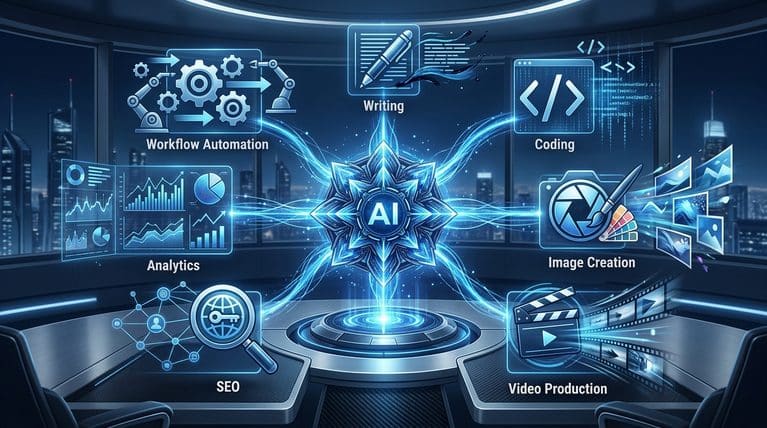
Artificial intelligence is moving from an experimental technology into an everyday part of modern work. What started with simple automation and recommendation algorithms has evolved into AI systems capable of writing, coding, analyzing documents, generating images, producing videos, translating languages, answering customers, processing financial information and assisting professionals with increasingly complex decisions.
This rapid evolution has created an uncomfortable question for millions of workers around the world. If artificial intelligence can perform tasks that once required human intelligence, what happens to the people currently paid to perform those tasks?
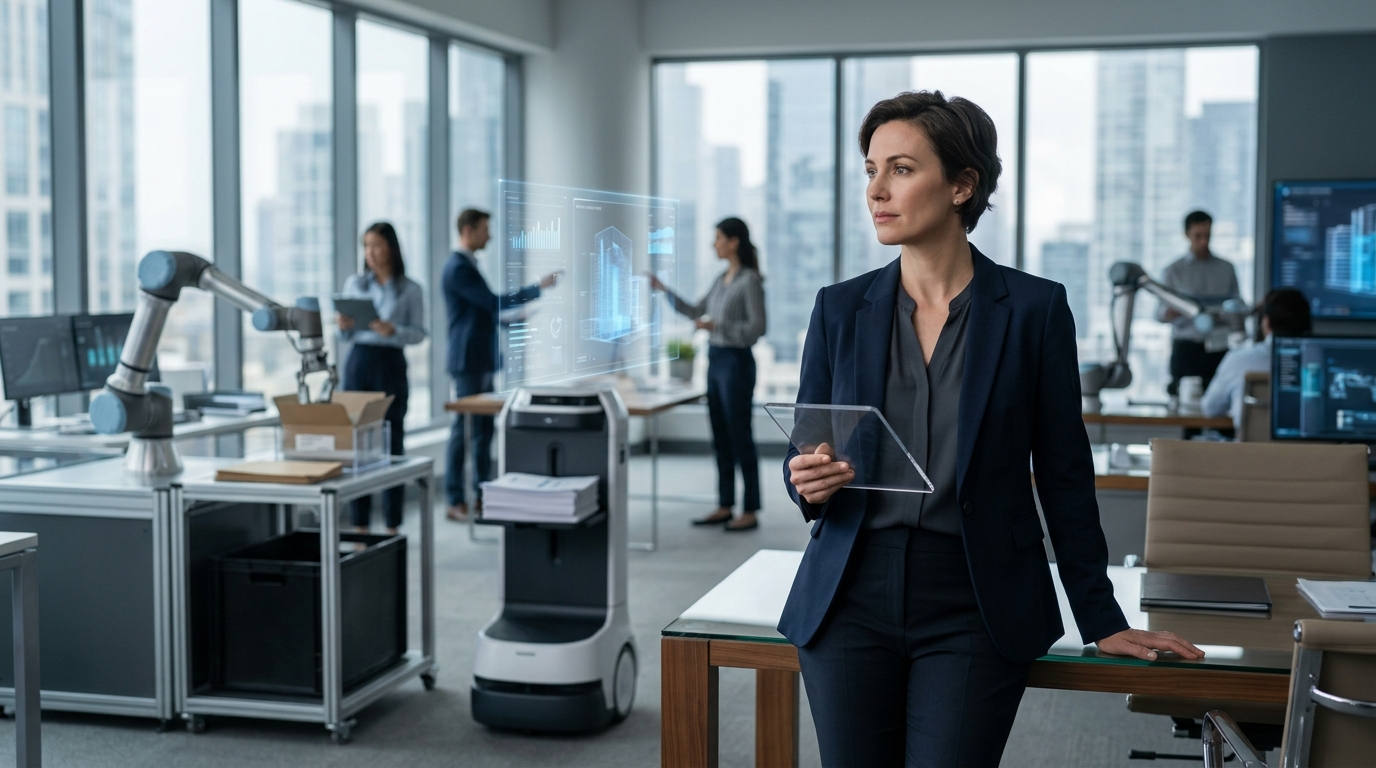
The answer is more complicated than the idea that artificial intelligence will simply replace humans. Some jobs will decline, some tasks will disappear, many occupations will change dramatically and entirely new careers will emerge. The International Labour Organization estimates that roughly one in four workers globally is employed in an occupation with some degree of exposure to generative AI. However, its research also concludes that transformation of jobs is generally more likely than complete replacement.
That distinction is fundamental to understanding the future of AI and jobs. Artificial intelligence does not necessarily need to eliminate an entire profession to disrupt its labor market. If AI allows five employees to accomplish work that previously required ten, the profession still exists, but the number of available positions can fall dramatically.
The coming decade could therefore produce one of the largest reorganizations of work since the arrival of personal computers and the internet. The people who understand what is happening and adapt their skills may discover extraordinary opportunities. Those who depend entirely on repetitive tasks that machines can perform increasingly well could face much greater pressure.
AI Will Replace Tasks Before It Replaces Entire Careers
A job is rarely one activity. Most occupations combine dozens of different tasks requiring different levels of knowledge, judgment, creativity, communication and physical ability.
Consider an administrative employee who organizes meetings, writes emails, prepares reports, communicates with colleagues, updates databases and handles unexpected requests. Artificial intelligence can already automate parts of that workload. It can summarize meetings, draft messages, extract information from documents and prepare preliminary reports.
However, resolving a sensitive disagreement between colleagues or understanding the priorities of a complicated situation may still require human judgment.
This means that AI automation will often happen gradually. Companies may automate the easiest and most repetitive parts of a job first. Employees will then spend more of their time performing the remaining higher-value activities.
The economic consequences can still be significant. A company may discover that a smaller team equipped with AI can process the same workload as a much larger traditional team.
The future of work is therefore not simply about whether a job exists. It is also about how many humans are required to perform it.
Data Entry Could Become One of the First Major Casualties
Data entry is one of the clearest examples of work exposed to AI automation. Modern multimodal systems can increasingly read documents, invoices, forms and emails, extract relevant information, categorize it and transfer it into structured databases automatically. Humans may still be needed to verify errors or unusual cases, but the amount of repetitive manual input required can decline significantly.
This transformation does not necessarily mean data-entry jobs will disappear overnight. Instead, companies may gradually hire fewer workers for purely manual data-entry roles as automation becomes more capable. Employees who develop skills in databases, workflow automation, quality control and business processes will therefore be better positioned than those whose work depends entirely on manually transferring information.
Administrative and Secretarial Jobs Will Change Dramatically
Data entry is one of the clearest examples of work exposed to AI automation. Modern multimodal systems can increasingly read documents, invoices, forms and emails, extract relevant information, categorize it and transfer it into structured databases automatically. Humans may still be needed to verify errors or unusual cases, but the amount of repetitive manual input required can decline significantly.
This transformation does not necessarily mean data-entry jobs will disappear overnight. Instead, companies may gradually hire fewer workers for purely manual data-entry roles as automation becomes more capable. Employees who develop skills in databases, workflow automation, quality control and business processes will therefore be better positioned than those whose work depends entirely on manually transferring information.
Customer Service Could Become AI First and Human Second
Customer support is likely to become one of the most visible areas transformed by artificial intelligence. Unlike traditional chatbots limited to predefined questions and scripted responses, generative AI can understand natural language, follow conversational context and respond dynamically to complex requests, creating a faster and more natural customer experience while automating many routine support interactions.
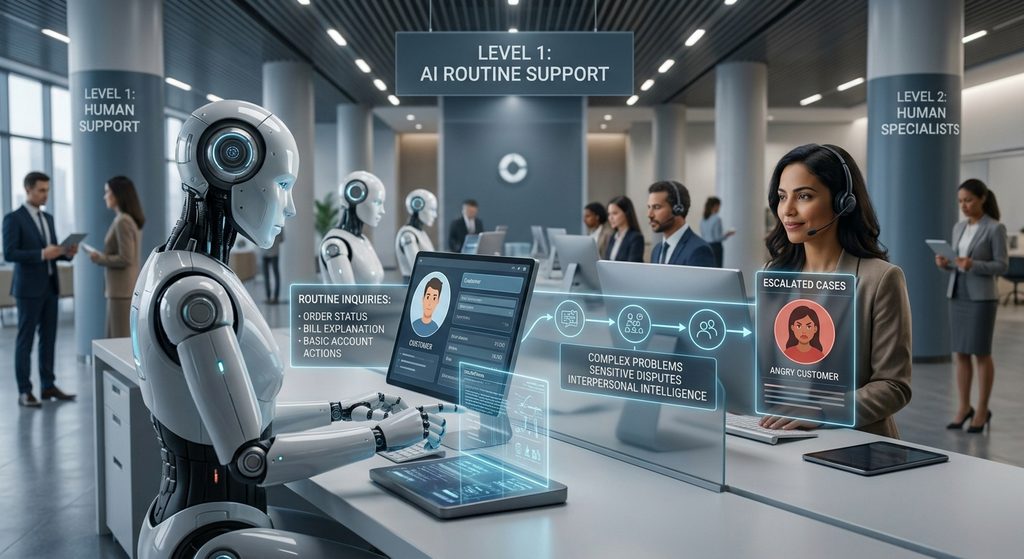
Modern conversational AI can handle a growing share of routine customer-service tasks by understanding natural language, maintaining context and connecting with company systems. It can answer common questions, check orders, explain bills and guide customers through basic troubleshooting, allowing businesses to manage large volumes of conversations with fewer human agents.
Human support will remain essential for complex, sensitive or emotionally difficult situations. The most likely model is therefore a layered customer-support system where AI handles the first interaction and routine requests, while experienced human specialists focus on technical problems, disputes, negotiations and cases requiring empathy or judgment.
Telemarketing Faces an Even Greater Automation Risk
Telemarketing is particularly vulnerable because the work is repetitive, measurable and already highly structured.
Modern AI voice systems can generate increasingly natural speech. Combine this technology with customer databases, sales scripts and automated CRM platforms and companies can potentially automate significant portions of outbound sales communication.
An AI system could identify prospects, initiate conversations, explain a product and answer predictable questions before transferring interested customers to a human salesperson.
Regulation could limit this transformation. Governments may impose disclosure rules or restrictions on automated calls, while consumers may increasingly reject interactions with synthetic agents.
Nevertheless, from a purely technological perspective, routine telemarketing represents exactly the type of structured communication AI can increasingly perform.
Human salespeople will remain much more important where persuasion depends on relationships, trust, negotiation and understanding complicated customer needs.
Cashiers Are Being Replaced by More Than Artificial Intelligence
Not every declining profession will disappear because of generative AI specifically.
Cashiers are already experiencing automation through self-checkout terminals, digital ordering systems, mobile payments and increasingly sophisticated retail technology.
Artificial intelligence can accelerate the process through computer vision, automated inventory systems and intelligent fraud detection.
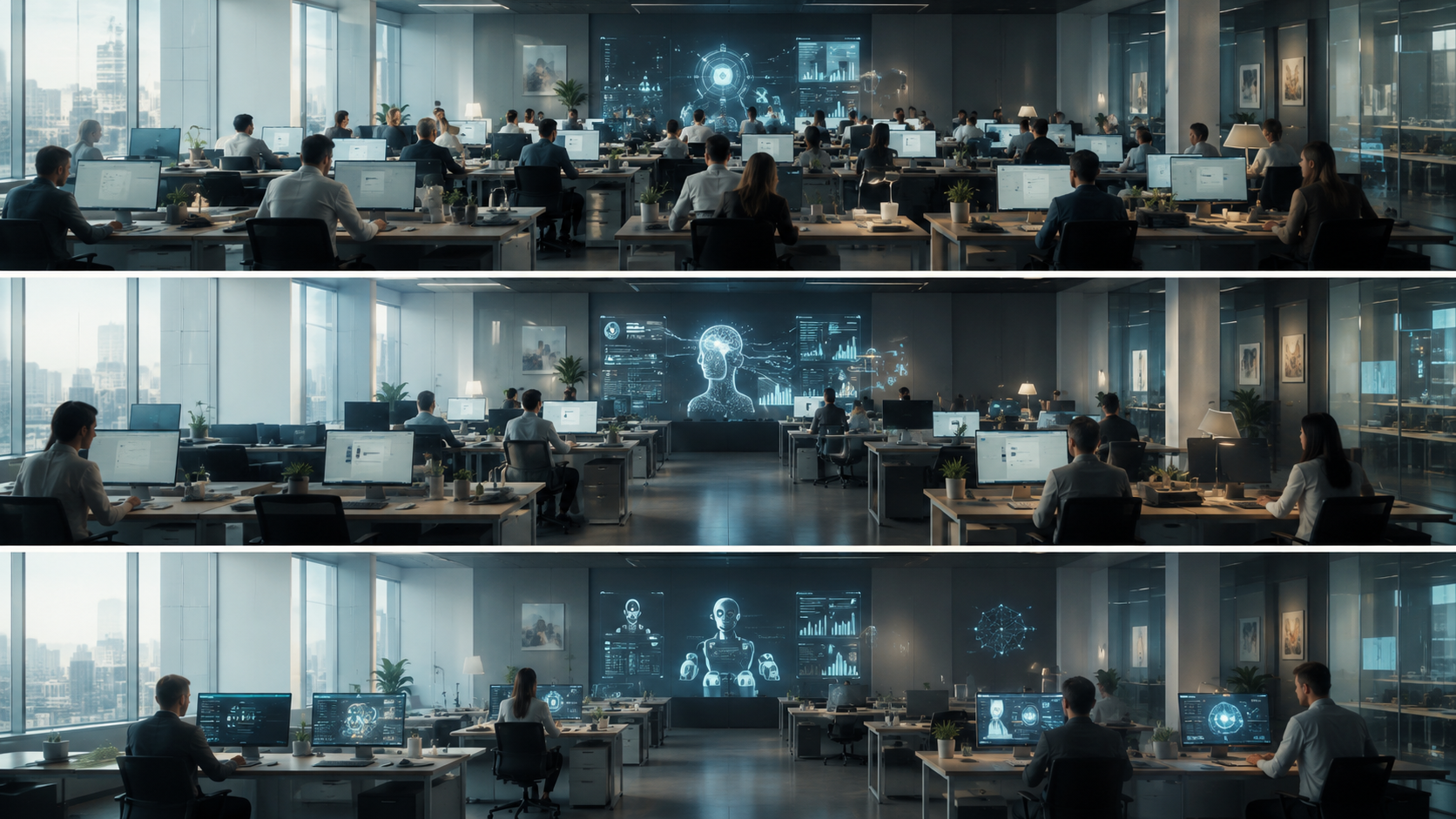
The World Economic Forum identifies cashiers and ticket clerks among roles expected to experience significant decline through 2030.
The transition will not happen at the same speed everywhere.
Labor costs differ between countries. Small shops operate differently from multinational retailers. Some customers still prefer human interaction. Businesses offering premium service may deliberately retain employees.
But large retailers have strong financial incentives to automate repetitive checkout processes.
Future retail workers may therefore spend less time scanning products and more time helping customers, managing automated systems and resolving problems.
Bank Tellers Are Experiencing a Similar Transformation
Banking provides a useful preview of how automation can transform an industry gradually rather than overnight.
ATMs automated withdrawals decades ago. Online banking reduced the need to visit branches. Mobile banking then moved many additional services directly onto smartphones.
Artificial intelligence represents another stage of that evolution.
AI assistants can answer routine financial questions, analyze transactions, support fraud detection and help process applications.
As more customers become comfortable managing money digitally, the traditional role of the bank teller becomes less central.
Physical branches are unlikely to disappear completely. Complex loans, business banking, investment products and sensitive financial situations can benefit greatly from human expertise.
However, employees whose work consists primarily of routine transactions face greater automation pressure.
The bank employee of the future may increasingly resemble a financial adviser or relationship manager rather than a traditional teller.
Basic Copywriting Is Already Being Disrupted
Generative AI has transformed writing faster than almost any other profession. Businesses can now produce product descriptions, emails, marketing copy, social-media posts and basic articles in seconds, dramatically reducing the cost of routine content production. This creates particular pressure on writers whose work consists mainly of producing standardized or repetitive text that AI can easily replicate.
Professional writing, however, is far from obsolete. As generic AI-generated content becomes abundant, original reporting, expert analysis, personal experience, distinctive opinions and powerful storytelling may become even more valuable. AI is making average content extremely cheap, but it cannot automatically create genuine expertise or discover new facts. The writers most likely to thrive will be those who provide something beyond words: knowledge, credibility, perspective and originality.
SEO Content Will Need to Become More Human
Generative AI has made it incredibly easy to produce large volumes of SEO content, which means the internet is becoming increasingly crowded with similar articles targeting the same keywords. As a result, simply publishing more content is unlikely to remain a strong strategy. Originality, usefulness, expertise and genuine value will become increasingly important for websites competing for visibility.
AI can still be an excellent tool for research, brainstorming, structuring articles and improving drafts. However, the strongest SEO content will combine AI efficiency with human expertise, original insights, real experience and careful editing. The competitive advantage is shifting away from producing more words and toward publishing information that is genuinely worth reading.
Translation Will Become Increasingly Automated
AI is rapidly transforming translation by understanding context, tone and complex language far better than earlier machine-translation systems. Routine emails, websites, subtitles and everyday communication can increasingly be translated almost instantly, reducing the need for humans to manually handle basic translation tasks.
Professional translators will remain valuable where precision, cultural understanding and specialized expertise matter. Legal, medical, literary and marketing translation often requires much more than converting words between languages. Translators may therefore increasingly become specialists in localization, quality control and cultural adaptation while AI handles the initial translation.
Graphic Designers Face the Generative Image Revolution
Generative AI is dramatically changing graphic design by allowing businesses to create illustrations, advertising concepts, product mockups and social-media visuals within minutes. Modern design software can also remove backgrounds, replace objects, extend images and generate numerous creative variations automatically, reducing the amount of manual production work required.
Yet professional design involves much more than creating attractive images. Branding, typography, visual communication, psychology and creative direction still require deeper understanding. Routine graphic production faces the greatest pressure, while experienced designers may increasingly become creative directors who guide AI tools rather than manually producing every visual element.
Stock Photography Faces a Fundamental Challenge
Generic stock photography is particularly exposed to generative AI because users can now create highly customized images instead of searching through thousands of existing photographs. Lighting, composition, location, subjects and aspect ratios can all be adjusted to match the exact requirements of a website, advertisement or social-media campaign.
Authentic photography, however, remains fundamentally different. Journalism, travel reporting, product photography and documentary work often require real visual evidence rather than synthetic imagery. AI may significantly reduce demand for generic conceptual stock images, but photographs that document real people, products, locations and events will continue to have important value.
Video Production Is Entering the Same Revolution
AI-generated video is bringing similar disruption to filmmaking and digital content production. New tools can generate scenes from prompts, animate images, enhance audio, remove objects, create backgrounds and automate parts of the editing process. This could allow individuals and small businesses to produce sophisticated promotional content that previously required larger teams and budgets.
Professional video production is unlikely to disappear, but workflows could change dramatically. Directors, editors and filmmakers may increasingly use AI to accelerate repetitive production tasks while concentrating on storytelling, creative direction, performance and emotional impact. As with design and writing, AI may automate much of the production process without replacing the human vision behind the final result.

Bookkeeping Is Highly Exposed to Automation
Bookkeeping is particularly vulnerable to automation because much of the work involves structured and repetitive processes. AI-powered financial software can increasingly read invoices and receipts, categorize expenses, reconcile transactions, identify inconsistencies and prepare basic reports with limited human intervention. Tasks that once consumed hours of manual work can therefore be completed much faster.
This does not mean accounting professionals will disappear. Taxation, auditing, regulatory compliance and financial strategy still require expertise, accountability and judgment. The transformation is more likely to push professionals away from routine data processing and toward interpretation, verification and financial decision-making, where human knowledge provides greater value.
Legal Work Will Be Transformed Rather Than Eliminated
The legal profession is highly exposed to AI because lawyers work with enormous amounts of text, including contracts, regulations, court decisions, evidence and correspondence. AI can search, summarize and compare these documents rapidly, making basic legal research and large-scale document review increasingly suitable for automation.
However, legal work also involves responsibility, confidentiality, negotiation and complex judgment. Lawyers must understand specific circumstances, advise clients and remain accountable for important decisions. AI is therefore more likely to become a powerful legal assistant than a complete replacement, although junior roles dominated by document review and routine research could change significantly.
Entry-Level Programmers Face an Unexpected Challenge
Software development has surprisingly become one of the areas most affected by generative AI. Modern coding assistants can generate functions, explain unfamiliar code, identify bugs, create tests and turn natural-language instructions into working prototypes. As these capabilities improve, manually writing routine code may become a smaller part of a programmer’s everyday work.
Programming itself, however, involves much more than producing syntax. Developers still need to understand architecture, security, performance, user requirements and whether AI-generated code actually works correctly. The greatest pressure may therefore fall on entry-level developers performing simple tasks, while experienced programmers increasingly become architects and supervisors of AI-generated software.
Junior Office Jobs Could Become the Hidden Victims of AI
One of AI’s less obvious effects could be a reduction in traditional entry-level professional opportunities. Junior analysts, lawyers, developers and marketing assistants often begin their careers by performing relatively structured tasks—the same type of work that AI is becoming increasingly capable of handling.
This creates a long-term challenge for companies. Replacing several junior workers with an experienced professional using AI may improve short-term productivity, but organizations still need to develop the experts of tomorrow. Businesses may therefore need to redesign internships, training and entry-level positions so younger employees can develop valuable experience even when routine beginner tasks are increasingly automated.
Journalists Will Compete Against Automated Information
Artificial intelligence can already transform structured information into readable content extremely quickly. Sports results, financial announcements, weather reports and corporate updates can be summarized automatically, putting significant pressure on forms of journalism that primarily repackage information already available elsewhere.
Original journalism remains fundamentally different. Investigative reporters interview sources, obtain documents, visit locations, verify competing claims and uncover information that did not previously exist in public datasets. AI may become an extremely capable research and production assistant, but the future could create an even stronger distinction between cheap automated information and valuable original reporting.
AI Could Change Accounting Without Eliminating Accountants
Accounting demonstrates why it is important to distinguish between automating a profession and automating tasks within that profession. AI can analyze transactions, detect anomalies, organize documents and generate financial summaries, reducing the amount of manual work required for many traditional accounting processes.
Accountants nevertheless provide value beyond processing numbers. They interpret regulations, advise businesses, evaluate financial risks and explain what financial information means in a specific context. As automation expands, successful accountants may increasingly become financial advisers and strategic analysts, while purely repetitive accounting work becomes less valuable.
Doctors Are Unlikely to Disappear
Healthcare could become one of the most important applications of artificial intelligence. AI can help analyze medical images, summarize patient information, search scientific literature and identify patterns across enormous amounts of clinical data, potentially allowing doctors to make faster and better-informed decisions.
But medicine involves much more than processing information. Doctors examine patients, interpret incomplete symptoms, understand personal circumstances, communicate difficult decisions and take responsibility for treatments with real consequences. Rather than eliminating physicians, AI is more likely to create a future where doctors equipped with powerful AI tools become significantly more capable and productive.
Nurses and Care Workers Could Become Even More Valuable
Nursing and caregiving are difficult to automate because they combine physical work, human interaction and unpredictable real-world situations. AI can analyze medical information and assist with monitoring, but caring for patients requires movement, communication, empathy and rapid responses to changing conditions.
As populations age, demand for healthcare and care workers could remain strong. AI and robotics may reduce administrative workloads and assist professionals, but nurses and caregivers are more likely to become AI-supported workers rather than being replaced by technology.
Teachers Will Use AI Rather Than Compete Against It
AI can already explain concepts, generate exercises, translate educational materials and provide personalized tutoring. These capabilities could automate some lesson preparation, assessment and repetitive administrative work, giving teachers more time to focus on students.
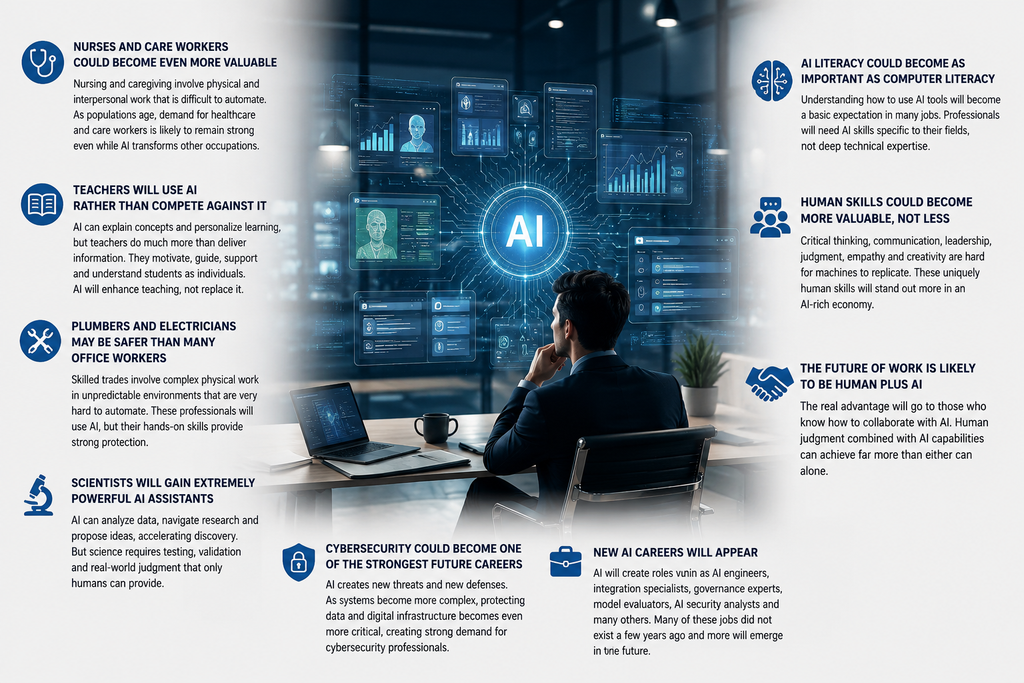
Teaching, however, involves much more than delivering information. Motivation, classroom management, empathy, mentorship and understanding individual students remain deeply human responsibilities. The teacher of the future may therefore use AI as an educational assistant while concentrating on the parts of learning that require genuine human connection.
Plumbers and Electricians May Be Safer Than Many Office Workers
Skilled trades such as plumbing and electrical work may prove surprisingly resilient to AI. Unlike digital office tasks, these professions require workers to operate in unpredictable physical environments, diagnose unique problems, manipulate tools and adapt when reality does not match a predefined plan.
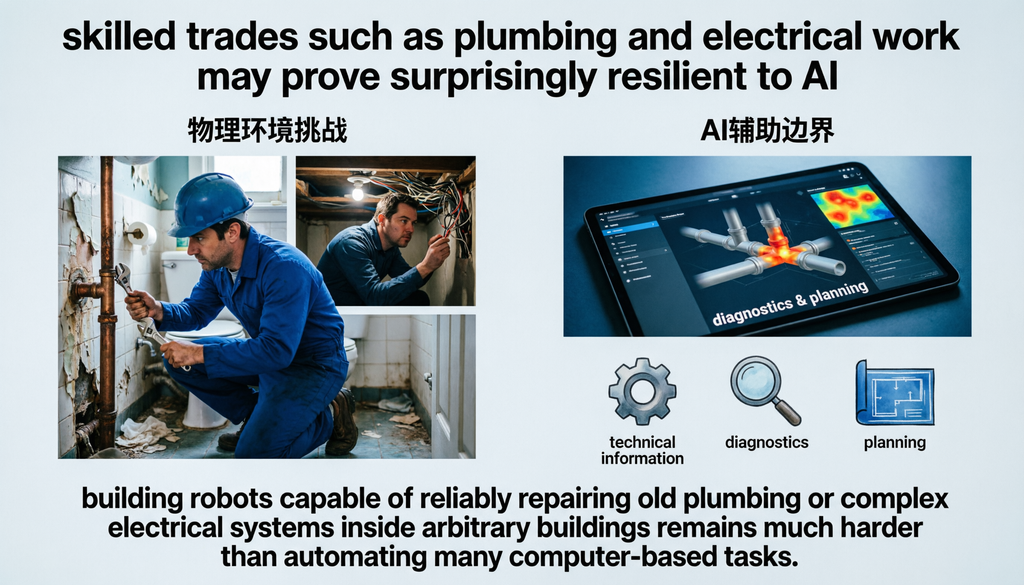
AI will still transform these occupations by assisting with diagnostics, planning and technical information. However, building robots capable of reliably repairing old plumbing or complex electrical systems inside arbitrary buildings remains much harder than automating many computer-based tasks, giving skilled tradespeople an important advantage.
Scientists Will Gain Extremely Powerful AI Assistants
Scientific research could become one of the greatest beneficiaries of artificial intelligence. AI can help researchers analyze enormous datasets, navigate scientific literature, identify patterns, run simulations and explore potential hypotheses much faster than traditional methods.
Scientists will nevertheless remain essential because research requires experimentation, validation and evidence. AI may propose possibilities, but humans must determine whether those ideas survive contact with reality. Combining human scientific judgment with machine-scale analysis could dramatically accelerate discovery.
Cybersecurity Could Become One of the Strongest Future Careers
AI is strengthening both sides of cybersecurity. Attackers can use intelligent systems to automate certain activities and create more sophisticated social-engineering attempts, while defenders can use AI to analyze enormous volumes of data and detect suspicious behavior faster.
As organizations become increasingly dependent on digital infrastructure and autonomous AI systems, protecting networks, identities and sensitive information becomes even more critical. Professionals who combine traditional cybersecurity expertise with a strong understanding of AI could therefore become particularly valuable.
New AI Careers Will Appear
Artificial intelligence will not only automate existing jobs; it will also create entirely new ones. Beyond AI engineers and machine-learning specialists, organizations will need professionals in AI integration, governance, model evaluation, security, compliance and implementation.
Many future occupations may not even have established names today. The internet similarly eliminated some forms of work while creating web developers, cloud engineers, digital marketers and social-media professionals. AI could produce another wave of careers built around technologies that are only beginning to emerge.
AI Literacy Could Become as Important as Computer Literacy
Computer skills were once considered specialized knowledge, but today they are expected across much of the workforce. AI literacy could follow the same trajectory, eventually becoming a basic professional capability rather than an exceptional technical skill.
This does not mean everyone needs to become an AI engineer. Doctors need to understand medical AI, marketers need to understand AI-powered marketing, and lawyers need to understand legal applications. The strongest combination may increasingly be deep domain expertise combined with the ability to use AI effectively.
Human Skills Could Become More Valuable, Not Less
As machines become better at routine intellectual work, uniquely human abilities may become more valuable. Critical thinking, communication, leadership, judgment, empathy and creativity are especially important when AI-generated answers need to be questioned, interpreted or applied to complex real-world situations.
The future workplace may therefore reward people who combine technical capabilities with strong interpersonal and decision-making skills. AI can generate possibilities at extraordinary speed, but humans will still need to determine which ideas matter, which decisions are appropriate and which goals are worth pursuing.
The Future of Work Is Likely to Be Human Plus AI
The future of employment may be less about humans versus AI and more about humans working alongside intelligent systems. An accountant using AI to analyze documents and detect anomalies, for example, could potentially accomplish far more than someone performing every step manually.
The same principle applies to programmers, lawyers, researchers, marketers and many other professionals. Competition may increasingly become human with AI versus human without AI, making the ability to combine professional expertise with intelligent tools one of the defining advantages of the future labor market.
AI Agents Could Transform the Office by 2030
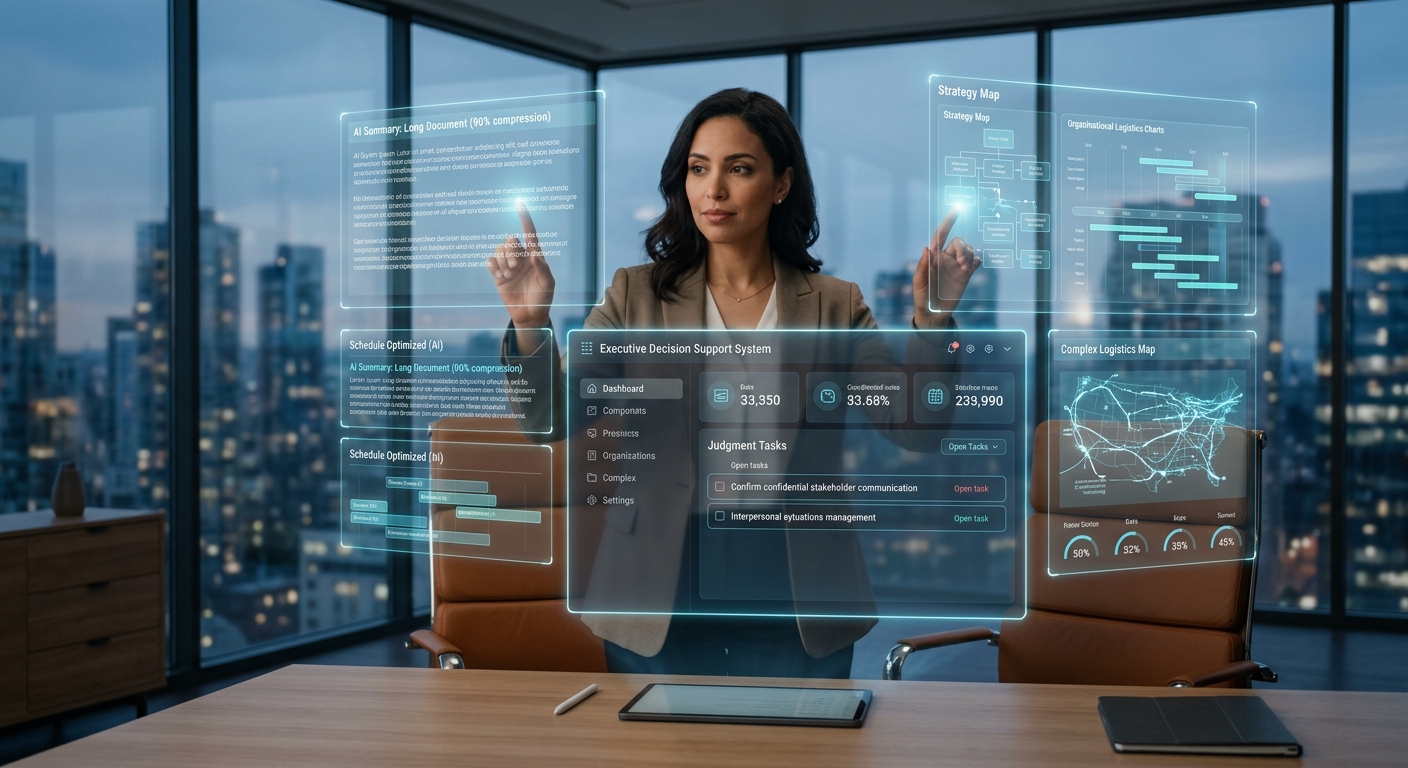
Future AI assistants could evolve from tools that simply respond to commands into autonomous agents capable of completing complex workflows. They may summarize emails, identify priorities, research suppliers, prepare documents and presentations, analyze information and coordinate schedules with minimal human intervention.
This could fundamentally redefine office productivity. Instead of spending hours navigating different applications and performing repetitive digital tasks, workers may increasingly define objectives while AI executes the operational steps. Human value would shift toward strategy, judgment and decision-making, while intelligent agents handle more of the routine digital work.
The Biggest Employment Risk May Be Reduced Headcount
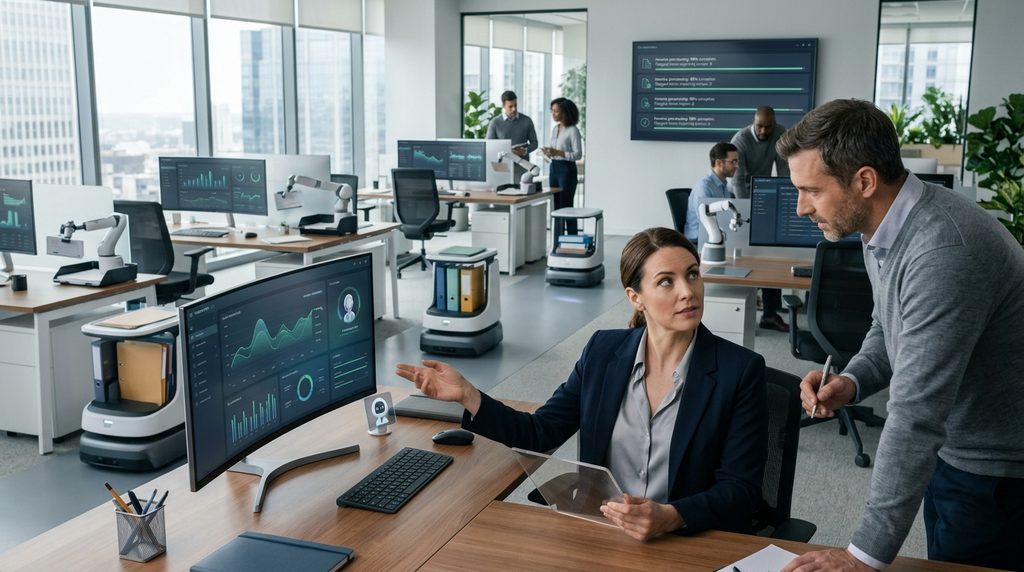
AI-driven job disruption may happen gradually rather than through dramatic mass layoffs. Instead of replacing an entire department, companies may simply discover that smaller teams equipped with AI can produce the same amount of work.
A team of twenty employees might gradually become fifteen and eventually ten as departing workers are no longer replaced. The profession still exists, but the number of people required to perform the work steadily declines.
This is why workers should look beyond headlines about whether a career is “safe.” The more important signal may be how AI is changing productivity and reducing labor requirements inside their profession.
AI Could Also Create More Work Than Expected
AI-driven productivity does not automatically mean fewer jobs. When technology makes software, design, research or other services significantly cheaper and faster to produce, demand can expand as businesses and consumers use more of them. This productivity effect may create new activities, markets and occupations, partially offsetting jobs lost to automation.

The World Economic Forum’s Future of Jobs Report 2025 illustrates this dynamic: broader labor-market transformations could create 170 million jobs while displacing 92 million by 2030, producing a net gain of around 78 million roles. These figures are not a prediction of AI alone, but they highlight an essential point: technological disruption can eliminate some jobs while simultaneously creating entirely new opportunities.
Governments Will Have an Important Role
Governments cannot treat AI-driven job disruption as a challenge for businesses and workers to solve alone. Education, retraining programs, labor protections and social safety nets will need to evolve as automation changes the skills companies demand. Regulation must also protect workers from harmful uses of AI while allowing innovation and productivity gains to continue.
Public policy will ultimately influence how the economic benefits of AI are distributed. Issues such as workplace surveillance, algorithmic management, market concentration and taxation of an increasingly automated economy may become more important as AI advances. Technology determines what becomes possible, but governments and institutions will play a major role in determining who benefits from that progress.
Education Must Prepare Students for a Different Economy
Education must evolve as AI makes information instantly accessible. Memorization alone is becoming less valuable, while critical thinking, creativity, communication, source evaluation, data literacy and the ability to ask the right questions are becoming increasingly important. Schools and universities will need to prepare students not simply to find information, but to understand, verify and apply it effectively.

AI literacy should therefore become an essential part of modern education. Students who depend on AI to complete every task risk weakening their own skills, while those who understand their subjects and use AI as a tool can become significantly more capable. The challenge for education is to teach students how to work with artificial intelligence without replacing genuine learning, independent thinking and human judgment.
Workers Should Not Try to Compete With AI at What AI Does Best
The smartest strategy is not to compete with AI at repetitive tasks, but to focus on work where human expertise, judgment and creativity add greater value. Writers, programmers, accountants, designers and translators can remain competitive by developing deeper expertise and using AI to increase their productivity. The goal is not to avoid artificial intelligence, but to work with it and move higher in the value chain.
Which Jobs Are Most Likely to Survive AI?
The most resilient careers will not necessarily be those untouched by AI, because almost every profession is likely to use intelligent tools in some form. Jobs that depend on human trust, complex judgment, leadership, specialized expertise, creativity or unpredictable physical work will generally be more difficult to automate completely.
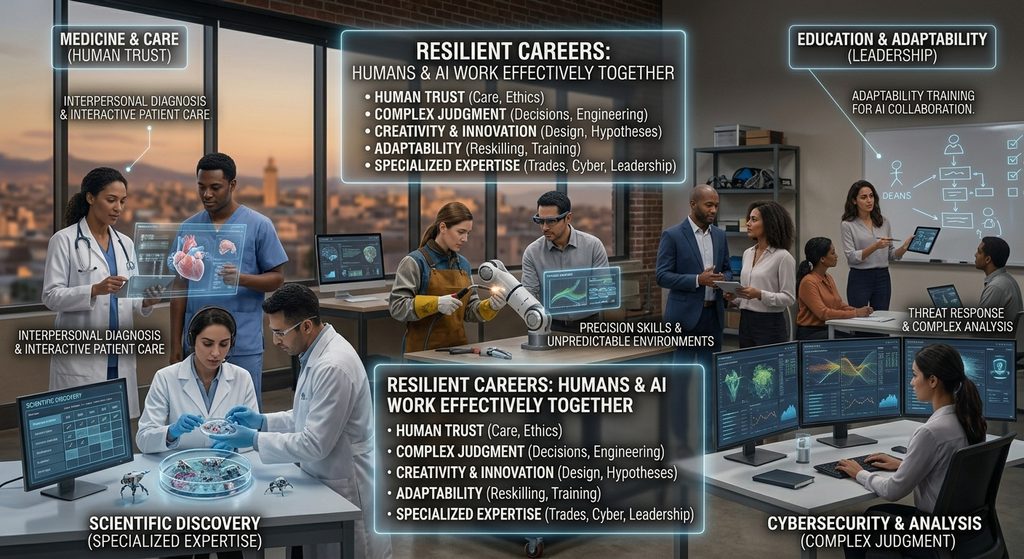
Doctors, nurses, scientists, skilled tradespeople, senior engineers, cybersecurity specialists, educators and leaders may therefore remain highly valuable, even as AI transforms how they work. The key to long-term career security will not be avoiding technology, but developing the adaptability and human capabilities needed to work effectively alongside it.
Which Jobs Could Decline the Most by 2030?
Routine clerical and administrative roles are among the occupations most exposed to AI-driven automation. Data entry, basic customer support, bookkeeping, cashier work and repetitive office tasks increasingly involve processes that software and AI systems can perform faster and at greater scale. Similar pressure is emerging in knowledge-based fields, where language models, image generators and automated document-processing tools can handle parts of copywriting, translation, graphic design, legal research and junior analytical work.
This does not mean these professions will disappear entirely by 2030. More likely, the routine parts of many jobs will shrink while human responsibilities shift toward judgment, communication, creativity and complex decision-making. In many industries, the biggest change may therefore be fewer people performing repetitive tasks and greater demand for workers capable of supervising, improving and working alongside automated systems.
Will AI Really Take Millions of Jobs?
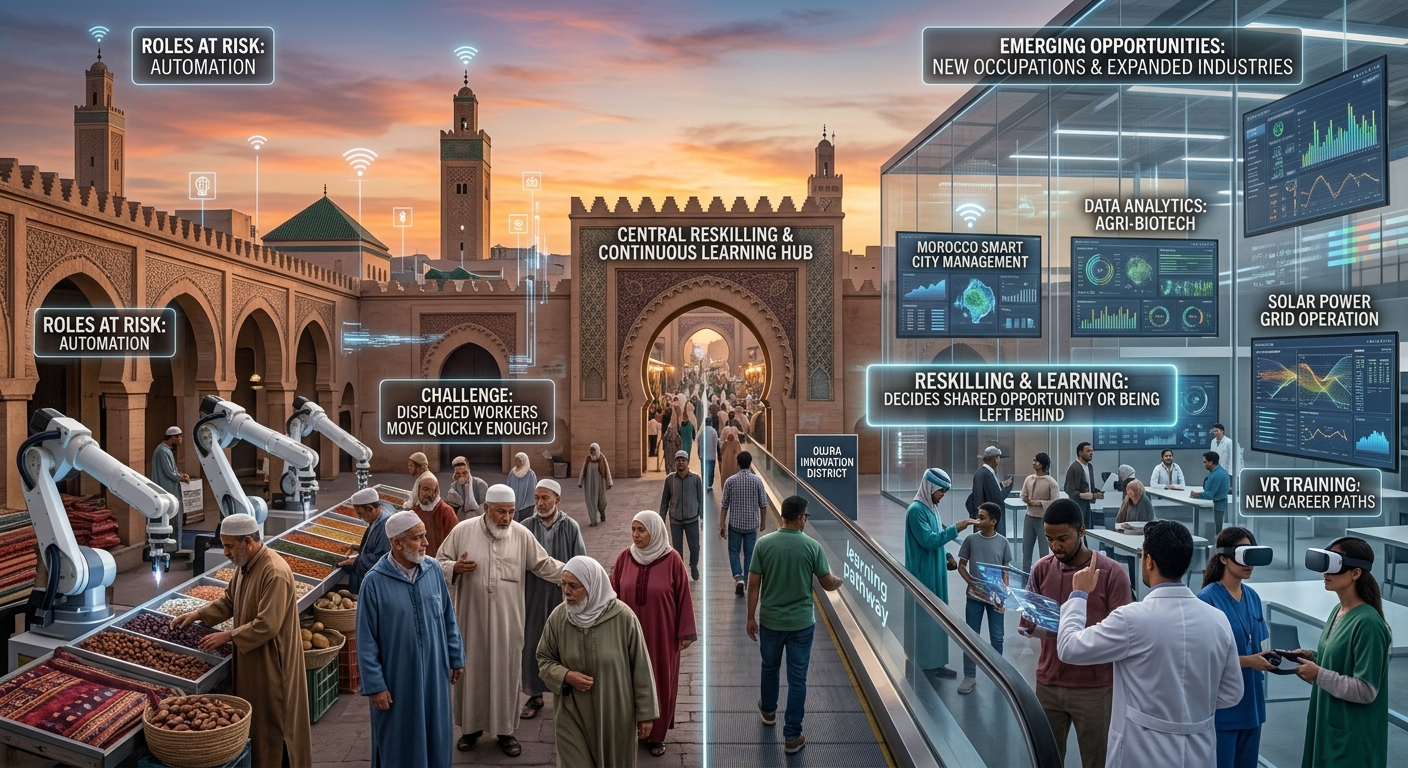
AI will almost certainly eliminate or reduce demand for certain roles, but job losses tell only part of the story. Technological change can simultaneously create new occupations, expand emerging industries and reshape existing careers rather than removing them entirely. The real economic challenge is therefore not simply measuring how many jobs disappear, but understanding whether displaced workers can move into new opportunities quickly enough to remain productive and financially secure.
That transition will not happen automatically. A worker whose role becomes automated cannot instantly move into a highly technical profession simply because demand exists elsewhere. Education, age, location, experience, access to training and local economic conditions all influence a person’s ability to adapt. As AI spreads across industries, reskilling and continuous learning may therefore become essential parts of modern employment policy, determining whether technological progress produces broadly shared opportunity or leaves significant groups of workers behind.
Could Artificial General Intelligence Change Everything?
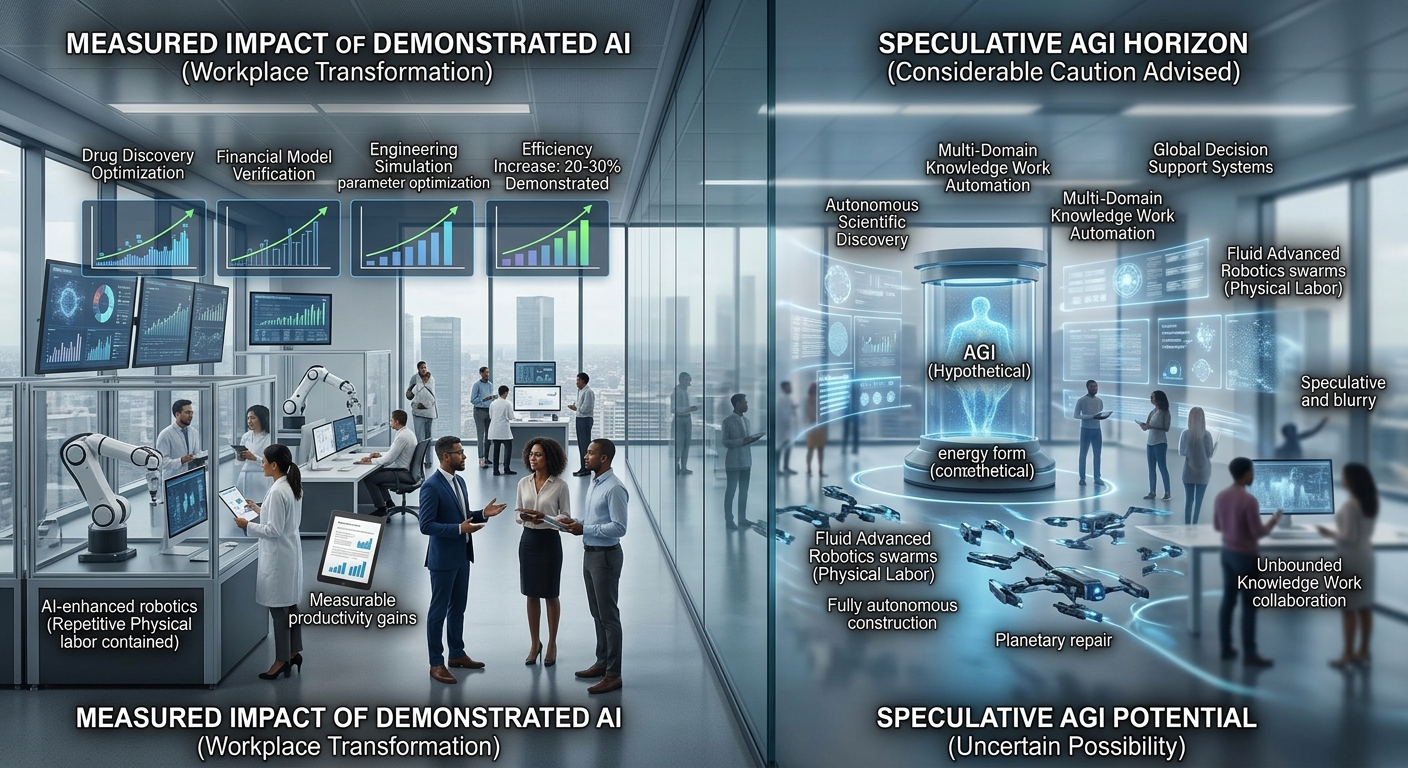
Artificial general intelligence could represent a far more disruptive stage of AI development than the systems available today. While current AI excels at specific tasks and increasingly assists professionals across many industries, AGI is generally envisioned as a system capable of handling a much broader range of intellectual activities with human-level or potentially greater competence. If such technology becomes reliable and highly autonomous, its impact could extend far beyond routine automation, potentially transforming knowledge work, scientific research, engineering, decision-making and eventually physical labor through advanced robotics.
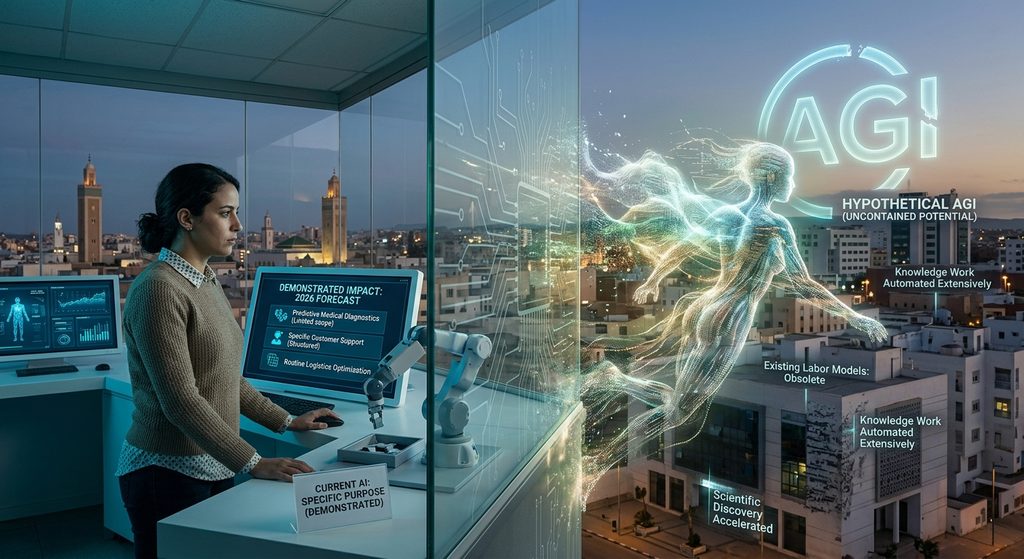
However, predictions about AGI should be treated with considerable caution. There is no reliable timeline for when—or whether—systems matching strong definitions of AGI will emerge, and their economic consequences would depend on capabilities, costs, regulation and how societies choose to deploy them. For that reason, discussions about the future of employment should clearly separate the measurable effects of today’s artificial intelligence from scenarios involving hypothetical future systems. Current AI already provides enough evidence to expect substantial workplace transformation; AGI remains a much more uncertain possibility that could fundamentally change those expectations.
2030 Will Probably Be the Beginning, Not the End
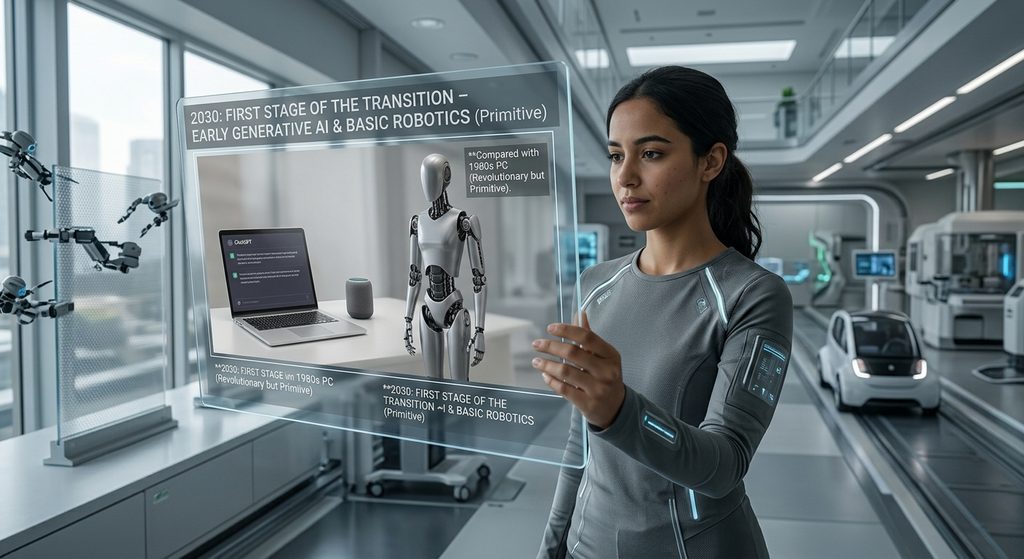
By 2030, artificial intelligence will likely be far more deeply integrated into everyday life than it is today. Instead of interacting with AI mainly through standalone chatbots, people may encounter intelligent systems throughout workplaces, vehicles, factories, healthcare, scientific research and connected devices. Combined with increasingly capable robotics and expanding computing infrastructure, AI could move beyond generating information and become an active layer of the physical and digital economy.
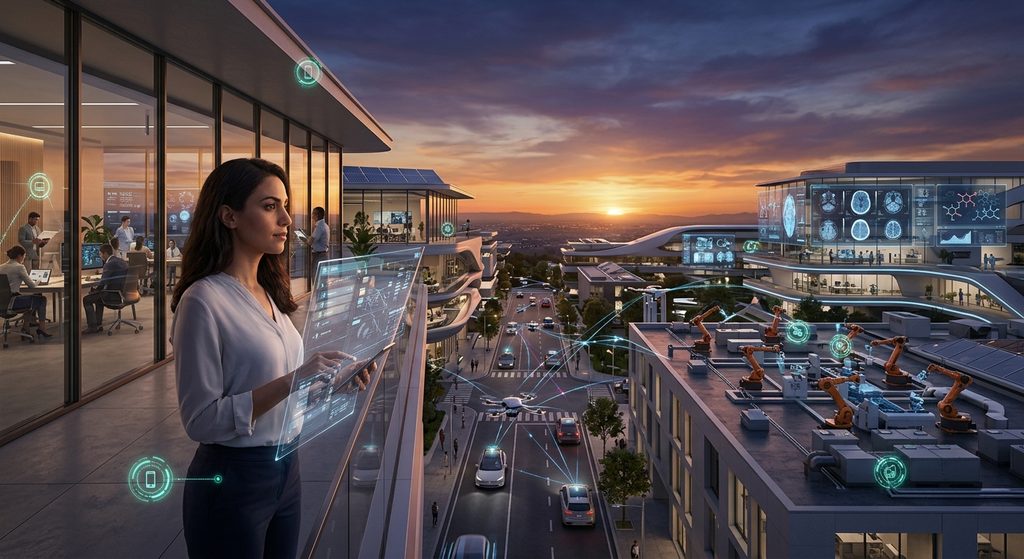
Yet 2030 should be viewed as a milestone rather than a destination. The technologies emerging today are likely to continue evolving for decades, creating possibilities that remain difficult to predict from our current perspective. Just as early personal computers gave only a glimpse of the internet-connected world that followed, today’s AI assistants may eventually appear remarkably limited compared with future systems. The transformation of work we witness by 2030 could therefore be only the opening chapter of a much larger technological shift.
Final Thoughts: AI Will Not Simply Destroy Work, It Will Redefine It
Artificial intelligence is unlikely to replace work in one dramatic moment. Instead, it is quietly changing what work means. Tasks that once required hours of repetitive effort can increasingly be completed in minutes, while professionals are being pushed toward responsibilities that demand judgment, creativity, communication and strategic thinking. The real transformation is therefore not simply about humans losing jobs to machines; it is about jobs themselves being redesigned around a new division of labor between people and intelligent systems. By 2030, many familiar professions may still exist, but the skills required to succeed in them could look remarkably different.
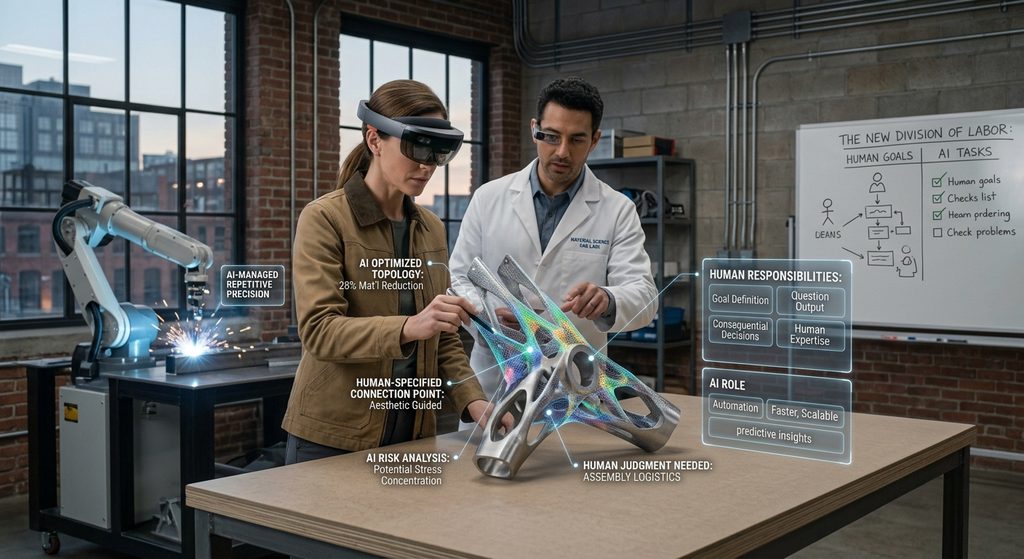
The people and organizations that adapt early will have the strongest advantage. Future professionals will not need to outperform AI at everything it can do faster, cheaper or at greater scale. Their value will come from knowing when to use AI, how to question its output and where human expertise still matters most. Technology will continue to automate tasks and reshape industries, but humans will remain responsible for defining goals, making consequential decisions and determining how these powerful systems should serve society. The future of work will therefore belong neither to humans alone nor to machines alone, but increasingly to those who learn how to make the two work effectively together.