Artificial intelligence is entering a new stage of development. For much of the recent AI boom, public attention focused on systems that could generate text, images, code, music and video. Those capabilities remain important, but some of the most consequential developments in artificial intelligence are now happening beyond the traditional chatbot.
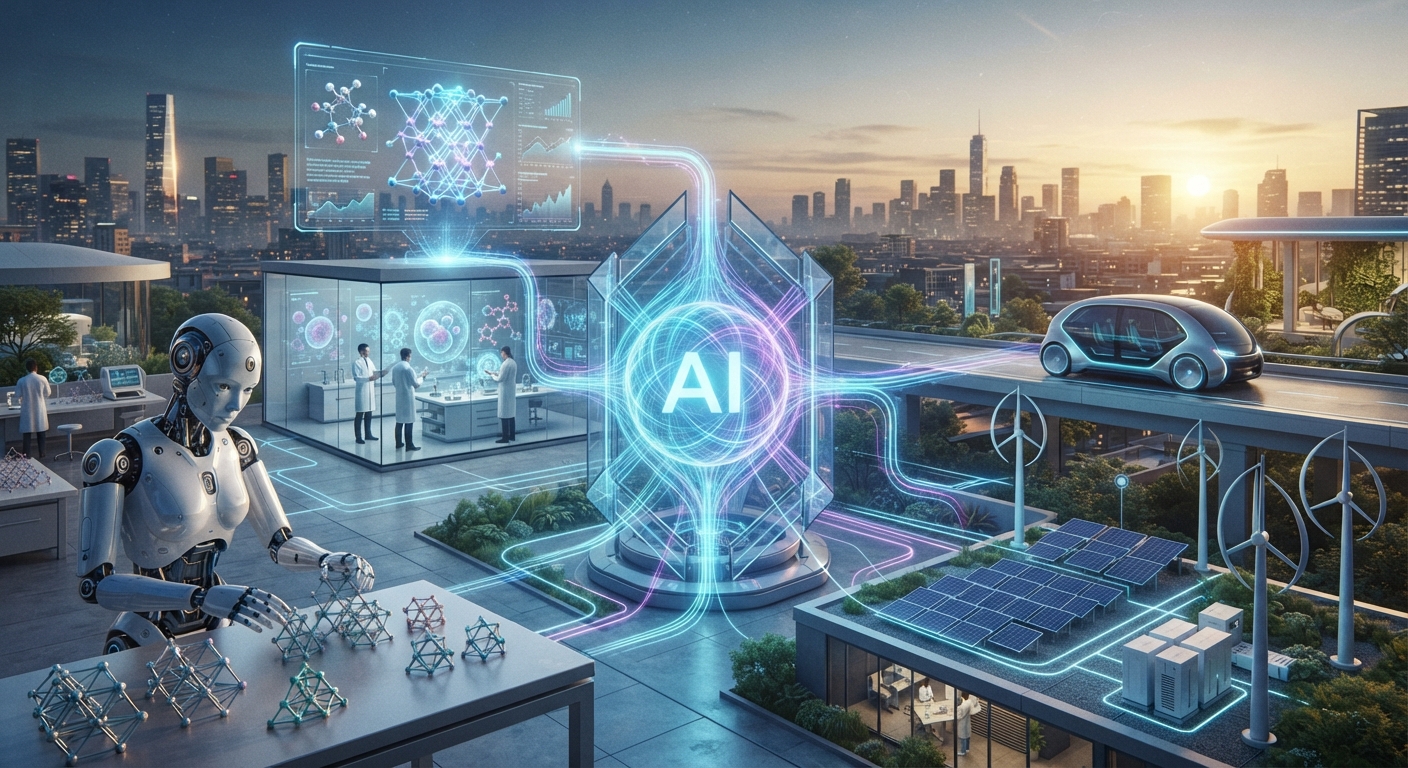
AI is increasingly moving into laboratories, factories, robots, vehicles, energy systems and scientific research. Models are becoming better at combining language, vision, audio and other forms of information, while AI agents are beginning to participate in multi-step workflows rather than simply responding to individual prompts.
This shift matters because the next generation of AI innovations may affect much more than digital productivity. Artificial intelligence could help scientists explore new materials, accelerate parts of drug discovery, improve how electricity grids are planned, make robots more adaptable and give machines a deeper ability to understand the physical world.
The transformation will not happen overnight, and many technologies discussed as revolutionary today still face major technical, economic, regulatory and safety challenges. Nevertheless, the direction is becoming clearer: AI is evolving from software that generates information toward technology that can increasingly reason, discover, coordinate and interact with the real world.
Here are ten AI innovations worth watching in 2026 and beyond.
1. Autonomous AI Agents
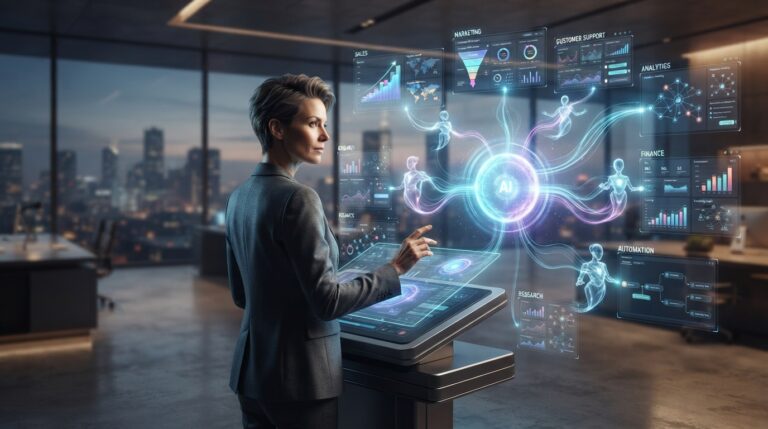
One of the biggest changes in artificial intelligence is the transition from AI assistants toward AI agents. A conventional assistant generally waits for a user to ask a question and then produces a response. An agent can be designed around a broader objective, determine intermediate steps, interact with permitted tools and adapt according to the results it receives.
Imagine asking an AI system not simply to summarize sales data but to investigate why sales declined. A properly configured agent might retrieve permitted data, compare different periods, examine product performance, identify unusual patterns and prepare its findings for a manager. The important innovation is not merely better language generation. It is the ability to participate in a workflow.
This could reshape business software because employees currently spend significant amounts of time moving between applications, searching for information and coordinating routine processes. Specialized agents could eventually assist with research, customer support, analytics, sales operations, software development and internal knowledge management.
The challenge is control. An AI system capable of taking actions creates different risks from one that simply generates text. Organizations therefore need clear permissions, monitoring and human approval for consequential decisions.
The future is unlikely to consist of one AI agent controlling an entire company. A more realistic model is an ecosystem of specialized agents with narrowly defined responsibilities working alongside humans.
2. Humanoid Robots with More General Intelligence
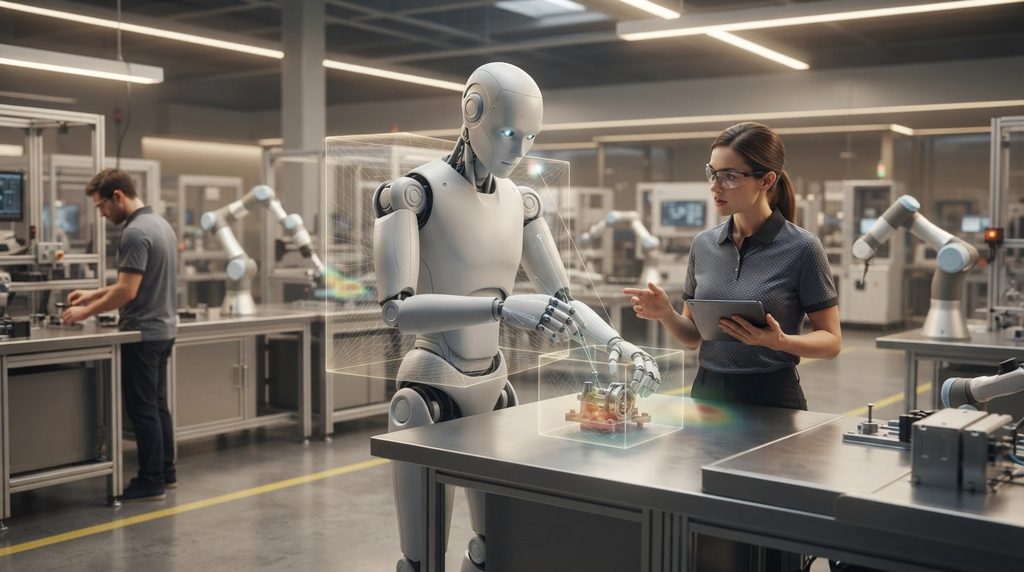
Robots have operated inside factories for decades, but traditional industrial robots are exceptionally good at one thing: repeating carefully programmed movements in controlled environments. The real world is considerably less predictable.
A warehouse worker may need to recognize an unfamiliar object, move around another employee, open a different container and adjust when something is unexpectedly placed in the wrong location. These situations require perception and reasoning rather than simple repetition.
This is where AI-powered robotics is advancing rapidly. In July 2026, Google DeepMind introduced Gemini Robotics 2, describing capabilities spanning whole-body control, fine manipulation and even collaboration between robots. The underlying goal is to enable machines to reason about movements and adapt to less predictable environments rather than execute only rigid sequences. (DeepMind)
The implications extend beyond humanoid robots. Similar intelligence could influence robotic arms, warehouse machines, agricultural robots, industrial equipment and specialized healthcare systems.
Humanoid form factors are particularly interesting because much of the human environment was designed around the human body. Doors, stairs, shelves, tools and workstations already assume particular physical dimensions. A sufficiently capable humanoid machine could theoretically operate within existing environments without requiring every workplace to be redesigned around robots.
However, impressive demonstrations should not be confused with universal deployment. Reliability, cost, battery life, dexterity, safety and the enormous variability of real environments remain substantial challenges.
3. Physical AI and Embodied Intelligence
Physical AI is broader than humanoid robotics. It refers to artificial intelligence systems designed to understand and interact with the physical world.
A language model operates primarily with information. A physical AI system must deal with gravity, distance, movement, uncertainty, objects and consequences. If a chatbot makes a poor prediction about where an object will move, the result may simply be an incorrect sentence. If an autonomous machine makes the same mistake, it could collide with something.
That makes spatial reasoning and environmental understanding essential.
Google DeepMind’s Gemini Robotics-ER 1.6, announced in April 2026, focuses specifically on embodied reasoning, including spatial and multi-view understanding for real-world robotic tasks. (DeepMind) NVIDIA has similarly been developing world models intended to help physical AI systems reason about what is happening in an environment and what may happen next. (NVIDIA Blog)
The long-term significance is considerable. AI could increasingly become an intelligence layer for machines rather than merely an interface on a computer.
Factories, warehouses, vehicles, drones and robots could potentially use related foundation-model technologies to perceive their environments, reason about them and determine appropriate actions.
This represents one of the most important transitions in modern AI: from digital intelligence to embodied intelligence.
4. AI Scientists and Autonomous Laboratories
Scientific research could become one of the most consequential applications of artificial intelligence.
Researchers already use AI to analyze scientific literature, model biological structures and search enormous datasets. The next step is more ambitious: AI systems capable of participating in the scientific process itself.
Google DeepMind’s Co-Scientist research, published in 2026, explores a multi-agent system that generates, debates and refines scientific hypotheses. (DeepMind) DeepMind has also highlighted a broader possibility in which scientific agents could propose hypotheses, help design experiments and discover new algorithms, while noting that validating the increasing volume of AI-generated scientific ideas could itself become a major bottleneck. (DeepMind)
Combine this reasoning capability with laboratory automation and the concept becomes even more interesting.
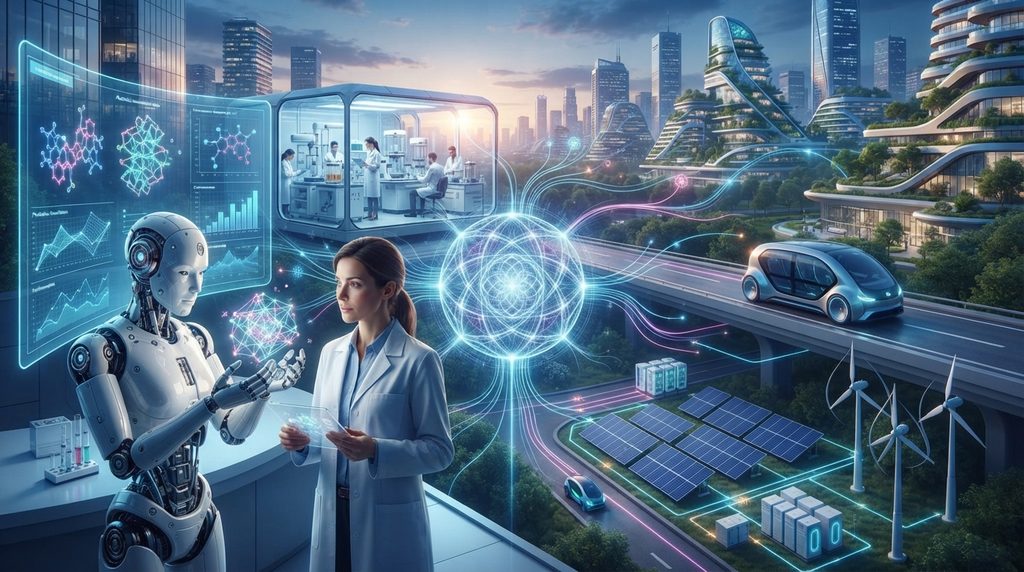
A future autonomous laboratory could use AI to analyze previous experiments, propose the next experiment, configure robotic laboratory equipment, collect measurements, interpret the results and decide which experiment deserves to happen next.
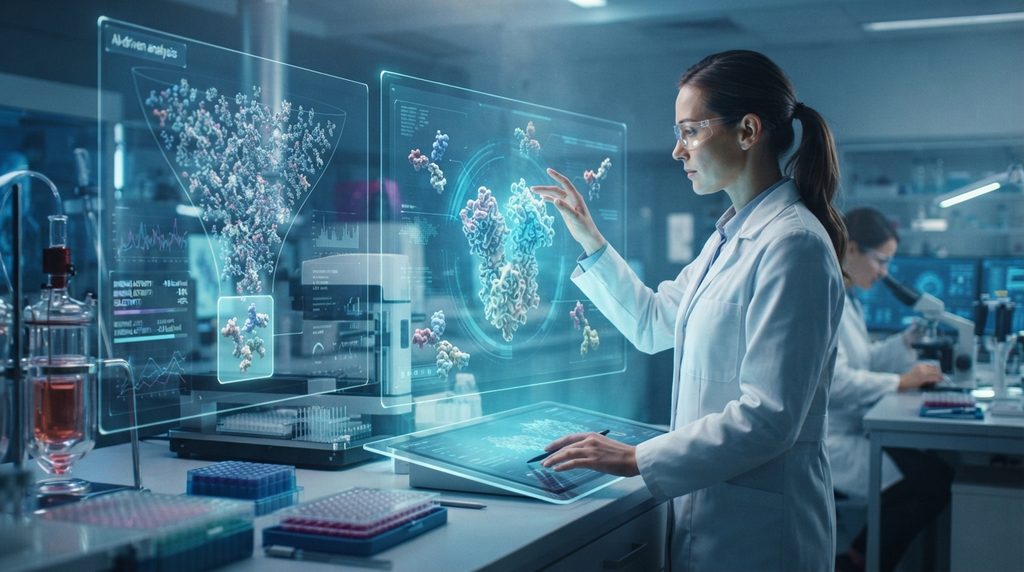
Humans would not disappear from science. Scientists would remain essential for choosing important questions, designing research programs, validating findings and understanding their broader implications.
But the speed of experimentation could change dramatically. Instead of researchers manually exploring every possible combination, AI and robotics could help search enormous scientific spaces and direct human attention toward the most promising discoveries.
5. AI-Powered Drug Discovery and Biology
Biology is extraordinarily complex. Even relatively simple biological questions can involve interactions between enormous numbers of molecules, proteins and cellular processes.
Artificial intelligence is increasingly being used to help scientists navigate this complexity.
One of the best-known examples is protein-structure prediction. Google DeepMind reports that AlphaFold has predicted more than 200 million protein structures and is used by millions of researchers around the world. (DeepMind) But structural biology is only one part of a much larger transformation.
AI research systems are increasingly being developed to assist with molecule design, biological simulation, hypothesis generation and other stages of scientific discovery. Microsoft Research, for example, lists AI projects spanning biomolecules, small molecules, materials and models intended to support drug-discovery research. (Microsoft)
The important distinction is that AI does not magically produce a medicine. Drug development still requires extensive laboratory validation, clinical trials, safety evaluation and regulatory approval.
Instead, the potential value of AI is narrowing enormous search spaces. If researchers have millions of possible molecules to investigate, models may help identify which candidates deserve expensive experimental attention first.
Over time, better biological models combined with automated experimentation could make some stages of biomedical research considerably more efficient.
6. AI-Designed Materials
Some of the technologies that could transform the world depend on materials that do not yet exist or are difficult to discover.
Better batteries require improved materials. Semiconductor manufacturing depends on specialized materials. Energy systems need materials capable of operating under demanding temperatures and pressures. Electronics, construction and transportation all depend on material properties.
Traditionally, discovering useful materials can involve enormous amounts of simulation and experimentation. AI offers another approach: learn patterns from existing material structures and use those patterns to explore candidates more efficiently.
In 2026, Microsoft Research reported experimental validation related to MatterSim, including the synthesis and measurement of a material candidate previously identified through AI-assisted screening. Microsoft also reported substantial improvements in simulation performance. (Microsoft)
The larger vision goes beyond predicting whether an existing material will work. Generative models may increasingly help researchers design candidate materials around desired properties.
A scientist could theoretically specify characteristics such as thermal conductivity, stability or another target property, while AI helps explore structures that may satisfy those requirements.
Combine AI material generation, simulation and autonomous laboratories, and an increasingly automated discovery loop becomes possible: design → simulate → synthesize → test → learn → redesign.
That could become one of AI’s most important contributions to science.
7. AI for Energy and Smarter Electricity Grids
Artificial intelligence itself consumes significant amounts of energy, but AI could also become an important tool for improving energy systems.
Electricity grids are extraordinarily complicated. Operators must continuously balance generation and consumption while dealing with changing demand, weather, renewable-energy variability, equipment constraints and transmission capacity.
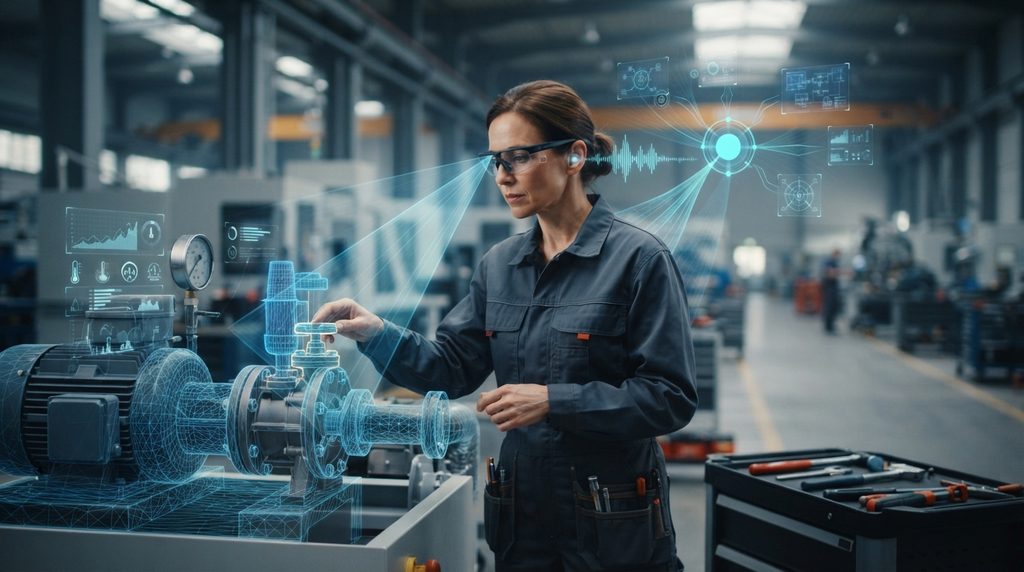
AI can help analyze these complex systems.
In September 2026, the U.S. Department of Energy announced an $11.5 million GridFM 2.0 research project aimed at developing advanced AI tools for utility planning. The project targets dramatically faster evaluation of potential grid scenarios as electricity demand grows. (The Department of Energy’s Energy.gov)
Potential applications extend from grid planning to renewable-energy forecasting, infrastructure monitoring and resilience. DOE has identified AI opportunities across planning, permitting, grid operations and reliability, while also emphasizing that deployment must consider security and other risks. (The Department of Energy’s Energy.gov)
This is important because electricity systems are becoming more complex at exactly the moment demand is increasing from electric vehicles, industrial electrification and AI infrastructure itself.
There is an important paradox here. AI could help optimize energy systems while simultaneously increasing electricity demand through expanding data centers. Google, for example, acknowledged in its 2026 environmental reporting that growth in AI infrastructure is increasing pressure on electricity systems even as the company invests heavily in clean-energy expansion. (blog.google)
AI therefore cannot be considered an environmental solution by itself. Its contribution will depend on how intelligently the technology and the infrastructure supporting it are designed.
8. Autonomous Vehicles and AI Mobility
Self-driving vehicles have been promised for years, but autonomous mobility is a useful example of how difficult physical AI becomes once software leaves the screen.
Driving requires much more than identifying road markings. An autonomous system must understand pedestrians, cyclists, construction, unusual vehicles, weather, ambiguous behavior and countless situations that may never appear exactly the same way twice.
This is one reason advances in physical AI and world models matter to autonomous driving. Systems capable of reasoning about what is likely to happen next could complement traditional perception systems.
Simulation is also becoming increasingly important. Rare dangerous situations cannot simply be recreated thousands of times on public roads for training. Virtual environments can generate and replay difficult scenarios while allowing developers to test how autonomous systems respond.
NVIDIA’s 2026 physical-AI work explicitly spans robotics and autonomous vehicles, with world models designed to combine visual reasoning, multimodal generation and predictions about future actions or events. (NVIDIA Blog)
The long-term impact could extend beyond personal cars. Autonomous technology could influence freight, delivery vehicles, industrial transport, ports, warehouses and public mobility.
But transportation is a safety-critical environment. Progress therefore depends not simply on whether a vehicle can drive itself during impressive demonstrations, but whether it can operate reliably across enormous numbers of unusual real-world situations.
9. AI-Powered Smart Infrastructure and Cities
Cities generate enormous quantities of information. Traffic systems, electricity networks, water infrastructure, public transportation, buildings and environmental sensors all create streams of operational data.
Today, many of these systems are managed separately. AI creates the possibility of analyzing them more dynamically.
Traffic systems could adapt to changing congestion. Public transportation could respond more effectively to demand. Infrastructure monitoring could identify unusual patterns before failures become severe. Buildings could optimize energy consumption based on occupancy and weather conditions.
Water management provides another interesting example. Intelligent systems could combine consumption patterns, pressure information, sensor data and maintenance records to help utilities identify anomalies or prioritize inspection.
The goal should not be a science-fiction city where an AI controls everything. Critical infrastructure requires strong cybersecurity, redundancy, accountability and human control.
In fact, as AI enters infrastructure, security becomes even more important. The U.S. Department of Energy has launched testbeds specifically intended to evaluate AI systems used in energy operations and critical infrastructure, reflecting the need to assess reliability and cybersecurity alongside capability. (The Department of Energy’s Energy.gov)
A genuinely smart city may therefore be less about spectacular futuristic buildings and more about invisible intelligence helping existing infrastructure operate more efficiently.
10. Multimodal AI That Understands the Real World
The earliest modern generative AI systems were often specialized. One model worked with text, another with images and another with audio.
The direction is increasingly multimodal.
A multimodal system can combine different forms of information within the same reasoning process. It might listen to speech, analyze a video, understand text, inspect an image and use contextual information to determine what is happening.

This becomes particularly powerful when AI interacts with the physical world.
Imagine a technician wearing smart glasses while repairing industrial equipment. An AI system could potentially see what the technician sees, hear a question, recognize the equipment, retrieve the relevant documentation and provide contextual assistance.
NVIDIA’s 2026 XR AI work, for example, describes multimodal agents for augmented-reality devices that can combine video, audio, sensor information, spatial context, enterprise knowledge and software tools. (NVIDIA Blog)
For robots, multimodality is even more fundamental. A useful robot cannot understand the world through language alone. It needs to connect language with vision, spatial relationships and physical actions.
This is why multimodal AI may eventually become less visible as a separate category. It could simply become the normal architecture of intelligent systems.
Humans experience the world through multiple senses simultaneously. Increasingly capable AI systems are beginning to move in a similar computational direction.
From Generative AI to Physical AI
The first phase of the recent AI revolution largely happened inside computers. People typed prompts and models returned text, images, code or other digital outputs.
The next phase increasingly connects those models with tools, sensors, machines and scientific instruments.
An AI agent can interact with software. An AI scientist can participate in research. A physical AI model can help a robot understand its environment. A world model can help an autonomous system reason about possible future events.
These developments share a common pattern: AI is moving from generating representations of the world toward interacting with the world.
That transition dramatically increases both the potential and the responsibility associated with the technology.
A hallucinated paragraph is inconvenient. An incorrect laboratory recommendation, infrastructure action or robotic movement can have significantly greater consequences.
The more AI can do, the more important validation, security and human oversight become.
Could AI Accelerate Scientific Discovery?
Scientific discovery may ultimately become one of the most valuable uses of artificial intelligence.
Modern researchers face a strange problem: humanity produces more scientific information than any individual researcher can realistically read. At the same time, many scientific search spaces are extraordinarily large.
AI can potentially help on both sides.
Models can organize existing knowledge while generative and agentic systems explore possible hypotheses. Simulation models can evaluate candidate molecules or materials before expensive physical experimentation. Robotic laboratories can potentially test promising candidates automatically.
The result could be a tighter loop between theory, simulation and experiment.
DeepMind researchers have already raised an important consequence of this development: if AI becomes extremely good at generating scientific hypotheses, generating ideas may cease to be the main bottleneck. Validating those ideas could become the harder problem. (DeepMind)
That is a useful reminder that more intelligence does not automatically produce more truth.
Science still requires evidence.
Which AI Innovation Has the Biggest Potential?
There may not be one winner because several of these technologies reinforce one another.
Multimodal models improve robotics. World models improve physical AI. AI-designed materials could improve batteries and hardware. Autonomous laboratories could accelerate materials and biological research. AI agents could coordinate parts of these workflows.
The most transformative development may therefore not be a single model.
It may be the convergence of several AI technologies into connected systems.
Consider a future research laboratory. An AI agent reads scientific literature and proposes a hypothesis. Another model simulates candidate materials. Robotic equipment performs experiments. Computer vision observes the results. The information returns to the model, which proposes the next experiment.
No individual component represents the entire breakthrough.
The innovation comes from the loop.
The Risks Behind the AI Innovation Boom
Powerful technologies create powerful risks, and AI is no exception.
Reliability remains a fundamental challenge. AI systems can generate convincing but incorrect outputs. When those systems participate in scientific research or control physical equipment, errors require much stronger safeguards.
Cybersecurity becomes another major concern. An AI agent connected to business software or infrastructure can potentially access sensitive information and perform actions. Permissions therefore need to be carefully restricted.
Robotics creates physical-safety concerns. Autonomous vehicles create transportation-safety questions. Healthcare AI creates questions around medical validation and accountability.
There are also economic questions. Automation can increase productivity while changing which skills businesses need. Some tasks may disappear, others may change and entirely new professions may emerge.
Energy consumption is another major issue. More capable models require substantial computing infrastructure, and the rapid construction of AI data centers is increasing pressure on electricity systems. (blog.google)
Responsible innovation therefore requires more than building increasingly powerful models. It requires designing systems that can be evaluated, monitored, secured and governed.
What Could AI Innovation Look Like by 2030?
Predicting technology four years into the future is inherently uncertain, particularly in a field moving as quickly as artificial intelligence.
But several directions appear plausible.
AI agents may become normal components of business software. Robots may become more adaptable and useful in controlled industrial environments. AI-assisted scientific research may become standard across more laboratories. Multimodal systems may increasingly understand live video and sensor information rather than only static prompts.
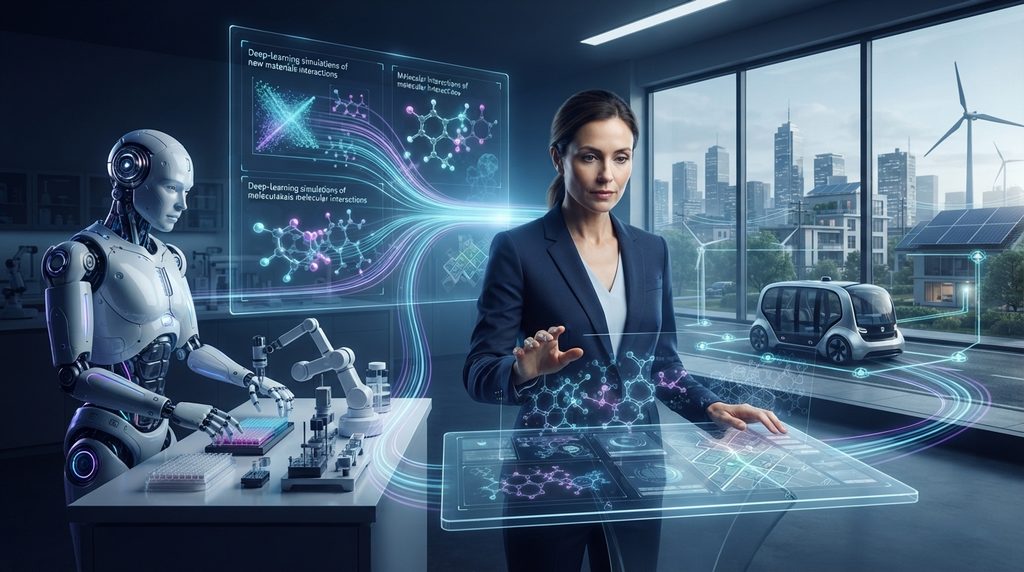
The distinction between “AI software” and ordinary software may also begin to disappear.
Today, companies advertise products as AI-powered because artificial intelligence is still a differentiating feature. In the future, intelligence could simply become an expected layer inside software, machines and infrastructure.
The biggest changes may also be the least visually dramatic.
A better battery material discovered faster through AI could matter more than another viral chatbot. A model that helps improve electricity-grid planning could affect millions of people without most of them knowing it exists. A scientific system that helps researchers eliminate years of unsuccessful experimentation could have consequences far beyond the laboratory.
That is why the future of artificial intelligence should not be measured only by how impressive AI conversations become.
The more important question is what AI enables humanity to discover, build and understand.
Frequently Asked Questions
What are the biggest AI innovations in 2026?
Some of the most important areas include autonomous AI agents, physical AI, increasingly capable robotics, AI-assisted scientific discovery, multimodal systems, materials discovery and AI applications in energy and infrastructure. Several of these fields are beginning to converge rather than developing independently.
What is physical AI?
Physical AI refers broadly to artificial intelligence designed to understand and interact with physical environments. It can include robots, autonomous vehicles, industrial systems and other machines that need to perceive their surroundings, reason about situations and take physical actions.
Will humanoid robots become common?
Humanoid robotics is advancing, but widespread adoption depends on reliability, safety, cost, dexterity and the ability to operate in unpredictable environments. Industrial and specialized deployments may develop differently from general-purpose household robots.
Can AI discover new medicines?
AI can assist researchers with parts of drug discovery, including analyzing biological information and exploring candidate molecules, but it does not eliminate laboratory experiments, clinical trials, safety testing or regulatory approval.
Can AI discover new materials?
AI models are increasingly being used to predict properties, simulate candidate materials and help researchers explore enormous chemical and structural search spaces. Experimental validation remains essential before a predicted material can become useful in the real world.
What are autonomous AI laboratories?
An autonomous or self-driving laboratory combines artificial intelligence with automated scientific equipment. The long-term idea is to allow software to help propose experiments, robotic systems to perform them and AI to analyze the results before determining which experiments should be attempted next.
Will AI replace scientists?
And if that transition continues, the most consequential AI breakthroughs of the next decade may not look like chatbots at all.
AI is more likely to change scientific workflows than simply eliminate scientists. Researchers remain essential for choosing meaningful questions, validating evidence, interpreting results and understanding the implications of discoveries.
What is the future of AI?
The future of AI appears increasingly multimodal, agentic and connected to the physical world. Instead of being limited to generating content, AI systems are likely to participate more deeply in software workflows, science, robotics and infrastructure.
Conclusion: AI Is Moving Beyond the Screen
The most interesting story in artificial intelligence is no longer simply whether the next model can write a better paragraph or generate a more realistic image.
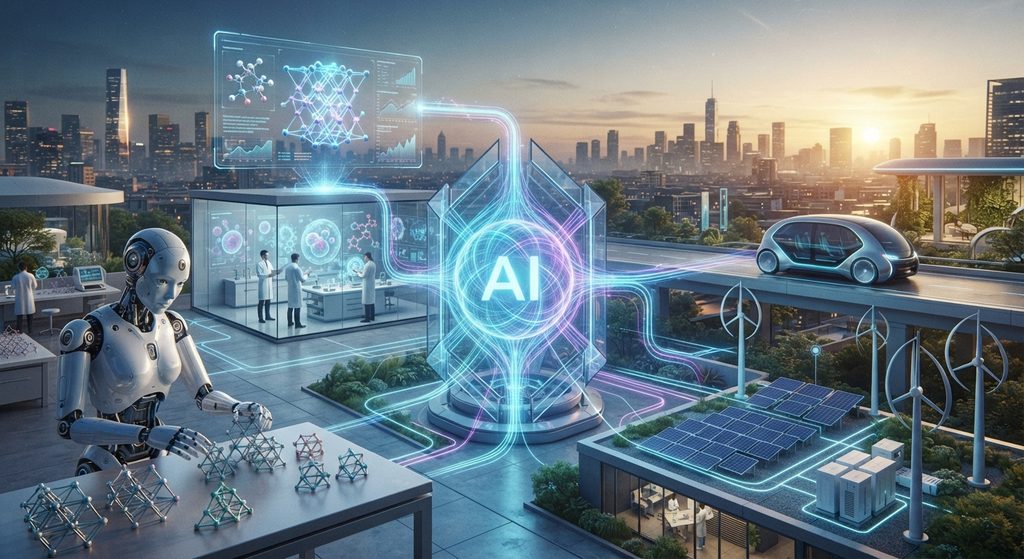
AI is beginning to move beyond the screen.
Agents are connecting intelligence with software tools. Robots are connecting intelligence with physical action. Scientific AI is connecting models with experiments. Materials systems are connecting generation with simulation. Energy applications are connecting machine learning with critical infrastructure.
These technologies are still developing, and some expectations surrounding them will inevitably prove too optimistic. But the broader direction is difficult to ignore.
The next era of artificial intelligence may be defined less by what AI can generate and more by what AI can help humanity discover, automate and build.
That is what makes the current wave of AI innovations particularly important. The technology is gradually expanding from a digital assistant into a new layer of intelligence across science, business and the physical world.