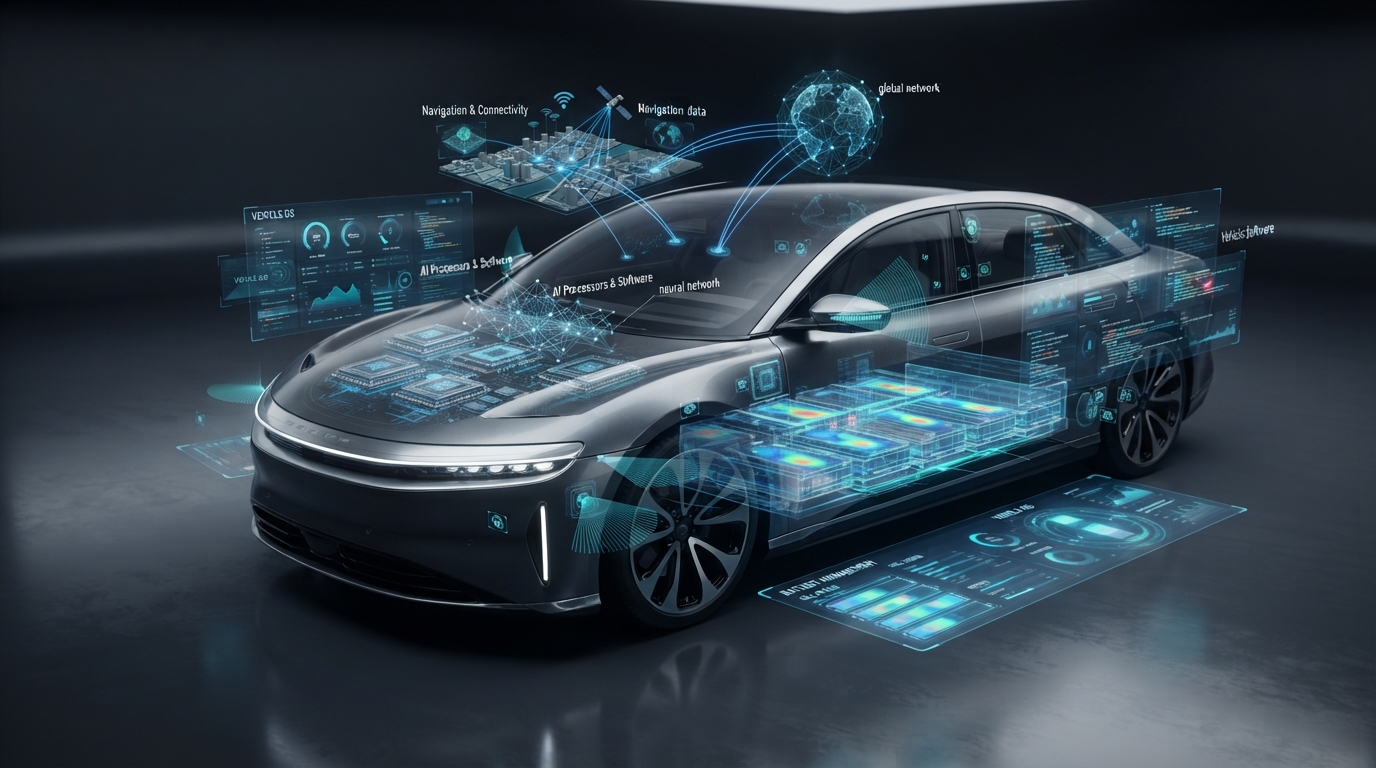
The automobile industry is undergoing one of the most significant transformations in its history. For more than a century, gasoline and diesel engines defined personal transportation, shaped global industries, influenced geopolitics, and helped determine how modern cities were designed. In 2026, that model is being challenged by a new generation of electric vehicles built around batteries, software, advanced computing, and increasingly intelligent driving systems.
Electric cars are no longer experimental products designed primarily for technology enthusiasts. They have become an important part of the global automotive industry, forcing established manufacturers and emerging competitors to rethink almost every major component of a vehicle.
The transition involves much more than replacing an internal-combustion engine with an electric motor. It is changing how cars are manufactured, how they receive energy, how they are maintained, how software is integrated into them, and eventually even how people interact with transportation itself.
The electric vehicle revolution is also closely connected to some of the biggest technological trends of the decade. Artificial intelligence is improving vehicle software and manufacturing. New battery technologies promise improvements in range, charging and efficiency. Renewable energy is becoming increasingly connected to transportation, while autonomous driving could eventually transform traditional ideas about vehicle ownership.
Understanding the future of electric cars therefore requires looking beyond the vehicle itself. EVs are becoming part of a much larger technological ecosystem connecting transportation, energy, computing and artificial intelligence.
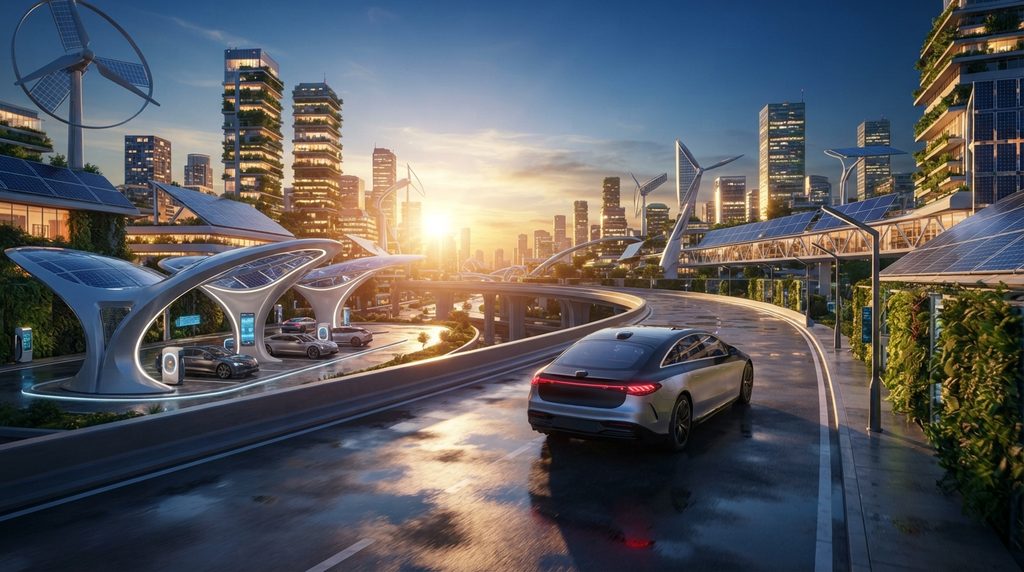
Why Electric Vehicles Represent More Than a New Type of Car
The fundamental architecture of an electric vehicle is significantly different from that of a conventional gasoline-powered car. Internal-combustion vehicles rely on complex engines containing many moving components, together with fuel systems, exhaust systems and multi-stage mechanical processes required to convert combustion into movement.
Electric vehicles replace much of this architecture with electric motors, power electronics and large battery packs. This simpler mechanical foundation creates opportunities that extend beyond energy efficiency.
Manufacturers can reconsider how space is distributed inside a vehicle because designers no longer need to build everything around a traditional combustion engine. Maintenance requirements can also change because electric drivetrains contain fewer mechanical components requiring routine service.
Performance characteristics are different as well. Electric motors can deliver torque almost immediately, which can provide strong acceleration without requiring the complicated transmission systems traditionally associated with high-performance vehicles.
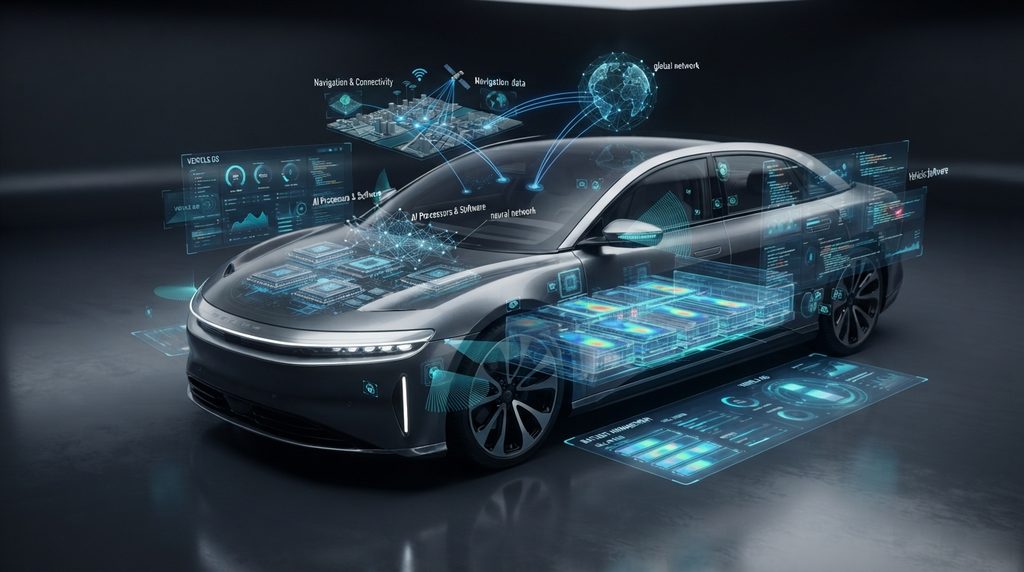
Perhaps the most important difference, however, is that modern EVs are increasingly becoming software-defined vehicles. A conventional automobile was historically a mechanical machine with electronic systems added to it. The emerging electric vehicle increasingly resembles a computing platform integrated with mechanical systems.
That distinction could fundamentally transform the automotive industry.
The Rise of the Software-Defined Vehicle
Modern cars already contain extraordinary amounts of software. Digital dashboards, navigation, battery management, cameras, sensors, driver-assistance systems, entertainment and connectivity all depend heavily on computing.
Electric vehicles have accelerated this transformation because their core systems are already highly electronic. Software can determine how energy is delivered from the battery, how regenerative braking behaves, how thermal systems manage battery temperature, and how drivers interact with many vehicle functions.
Some vehicles can also receive over-the-air software updates, allowing manufacturers to modify or improve certain capabilities without requiring the owner to physically visit a dealership.
This changes the traditional relationship between a manufacturer and a vehicle. Historically, a car was essentially finished when it left the factory. In a software-defined environment, parts of the driving and ownership experience can continue evolving after delivery.
The shift creates opportunities, but it also introduces important questions about ownership. If vehicle capabilities increasingly depend on software, consumers may need to think differently about subscriptions, cybersecurity, updates, data privacy and how long manufacturers will continue supporting older models.
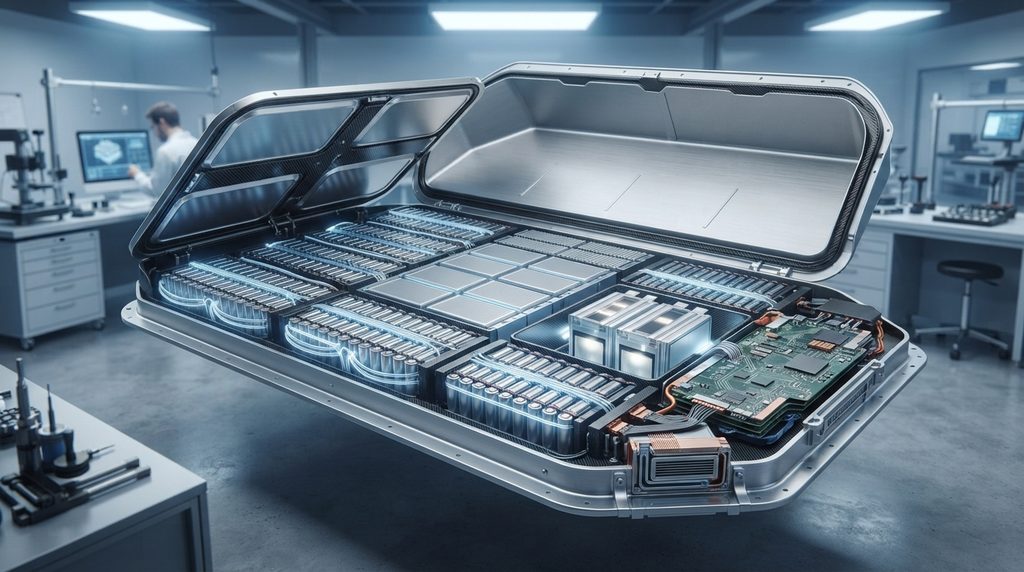
Battery Technology Is at the Heart of the EV Revolution
The battery is arguably the most strategically important component of an electric vehicle. It influences driving range, price, charging speed, vehicle weight, performance and lifespan, which explains why enormous amounts of research and investment are being directed toward battery innovation.
Current electric vehicles primarily depend on different lithium-ion battery families, with manufacturers selecting particular chemistries according to their priorities. Some designs emphasize energy density and performance, while others prioritize durability, cost, safety or material availability.
The future of EV batteries may therefore not be defined by one universal chemistry. Instead, the market could become increasingly specialized.
Affordable urban vehicles may use battery technologies optimized for cost and durability, while premium long-range vehicles could prioritize energy density. Commercial fleets may focus heavily on lifetime operating costs, while performance cars require batteries capable of delivering large amounts of power quickly.
Battery innovation is becoming a competitive advantage comparable to engine development during the traditional automotive era.
Solid-State Batteries Could Change Electric Vehicles
Among the most discussed future technologies are solid-state batteries. Traditional lithium-ion batteries generally rely on liquid electrolytes to transport ions between electrodes, while solid-state designs attempt to replace these components with solid materials.
If successfully commercialized, solid-state batteries could potentially provide advantages in areas such as energy density, charging performance and safety, depending on their chemistry and architecture.
The potential is significant. A vehicle capable of storing more energy without requiring a proportionally larger battery could achieve greater range without becoming dramatically heavier. Alternatively, manufacturers could maintain similar driving range while reducing battery size and overall vehicle weight.
Either scenario could improve EV efficiency and economics.
However, battery breakthroughs are notoriously difficult to commercialize. A technology that performs exceptionally well inside a laboratory cell must eventually be manufactured millions of times with consistent quality, competitive cost and acceptable long-term durability.
The challenge is therefore not simply inventing a better battery. The real challenge is manufacturing it reliably at automotive scale.
Sodium-Ion Batteries Could Help Make EVs More Affordable
Not every battery innovation is focused on achieving maximum range. Cost is equally important, particularly if electric vehicles are going to reach the global mass market.
This is where sodium-ion technology becomes interesting. Sodium is widely available, and sodium-ion chemistry could potentially reduce dependence on some of the materials required by conventional lithium-ion systems.
The technology also involves trade-offs, particularly around energy density. But lower energy density does not automatically make a battery technology unsuitable.
A small urban vehicle does not require the same battery characteristics as a premium long-distance SUV. Lower-cost chemistry could be extremely useful for shorter-range vehicles and other applications where affordability matters more than maximum energy density.
The future battery market may therefore include several technologies optimized for different jobs rather than one chemistry dominating every category.
Range Anxiety Is Becoming a Technology Problem We Can Solve
One of the most common concerns surrounding electric vehicles is range anxiety—the fear that a vehicle will run out of battery before reaching a suitable charging station.
Early electric cars made this concern understandable, but range is only one component of the ownership experience.
A vehicle offering enormous theoretical range but extremely slow charging may still be inconvenient. In contrast, a vehicle with moderate range and access to a dense network of reliable fast chargers could be considerably easier to use.
The real experience depends on the combination of battery capacity, vehicle efficiency, charging speed, charging-network density, charger reliability, route planning, weather and driving conditions.
The EV industry therefore needs to optimize the entire ecosystem rather than competing exclusively over maximum advertised range.
For many drivers, convenience may eventually become more important than simply installing the largest possible battery.
Fast Charging Could Matter More Than Extreme Range
Gasoline vehicles established a powerful consumer expectation: refueling should take only a few minutes. Electric vehicles introduce a different energy model.
For drivers with access to home charging, an EV can actually be more convenient during everyday use. The vehicle can charge while parked overnight, meaning the owner begins the morning with available energy instead of making a dedicated trip to a fuel station.
Long-distance journeys create a different challenge. Drivers need reliable fast-charging infrastructure capable of adding useful range quickly.
Charging performance is not determined solely by the charger. Battery chemistry, thermal management, vehicle voltage architecture and software all determine how quickly a vehicle can safely accept electricity.
Future competition may therefore increasingly focus on how quickly a useful amount of driving range can be added rather than simply how much energy a battery can theoretically store.
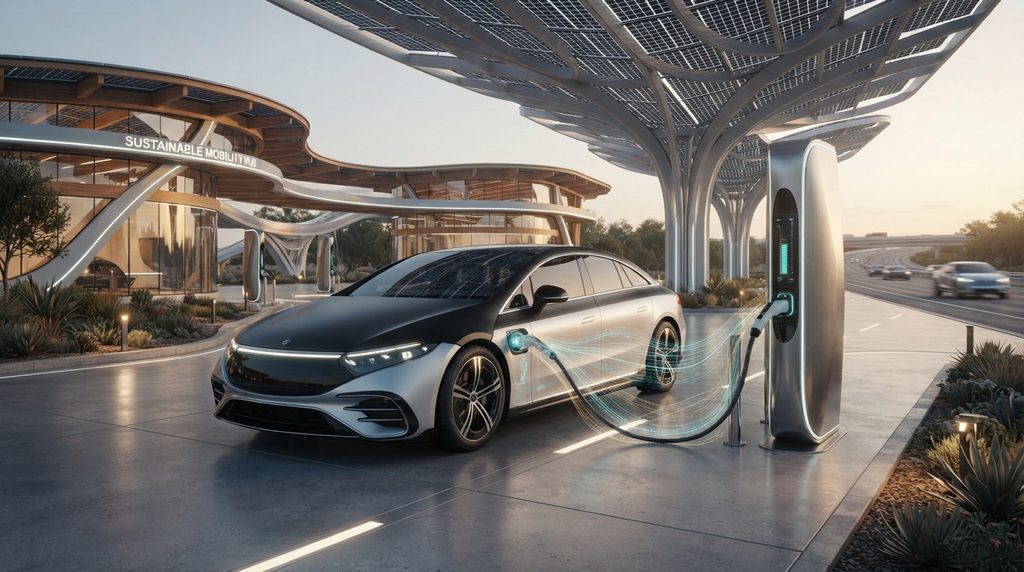
Electric Cars Are Connecting Transportation to the Power Grid
Gasoline vehicles and electricity networks historically operated as mostly separate infrastructures. Electric vehicles connect the two.
Millions of EVs represent millions of large mobile batteries that periodically connect to electricity networks. Initially, this creates a challenge because simultaneous charging during periods of high electricity demand could place additional pressure on local grids.
Intelligent charging could transform part of that challenge into an opportunity.
Vehicles do not necessarily need to begin charging immediately after being connected. Software can schedule charging for periods when electricity demand is lower, electricity prices are cheaper or renewable generation is particularly abundant.
This concept is broadly known as smart charging, and it could become increasingly important as electric vehicle adoption expands.
Vehicle-to-Grid Technology Could Turn Cars Into Energy Assets
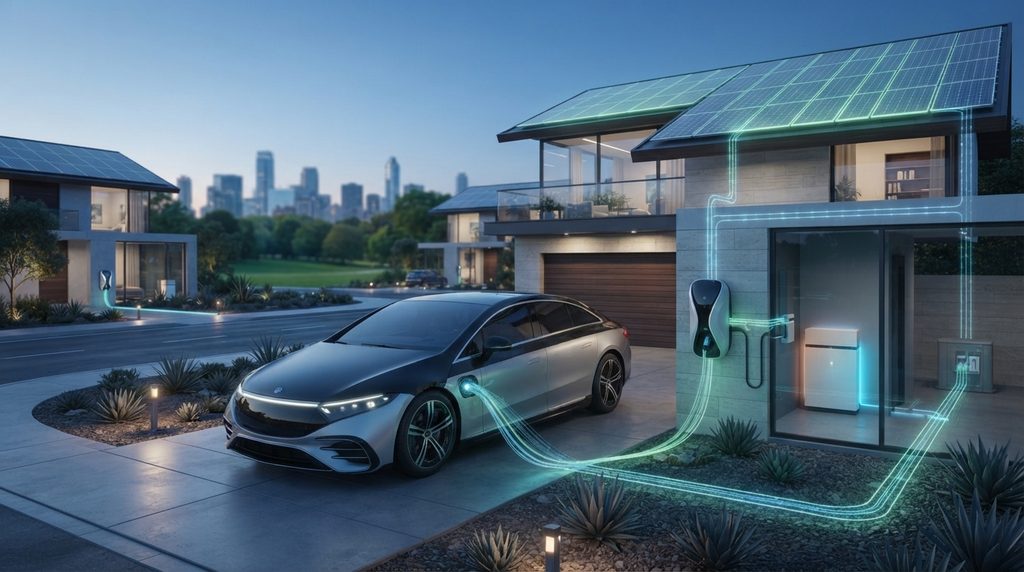
Some electric vehicles and charging systems are beginning to explore bidirectional charging, allowing electricity to move not only into a vehicle but potentially back out of its battery.
This creates concepts such as Vehicle-to-Home (V2H) and Vehicle-to-Grid (V2G).
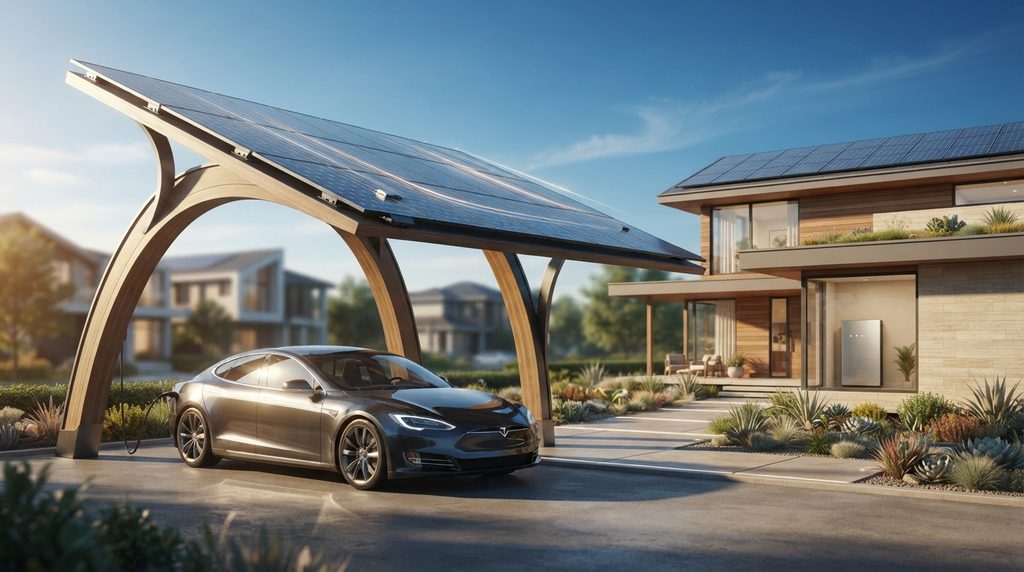
Imagine a home equipped with solar panels and a compatible electric vehicle. During the day, solar energy could contribute to charging the car. During an outage or a period of expensive electricity, stored energy in the vehicle could potentially support the home, provided the appropriate infrastructure and regulations are available.
At a much larger scale, fleets of connected electric vehicles could theoretically help electricity systems balance supply and demand.
This does not mean every EV will constantly return electricity to the grid. Battery degradation, infrastructure, user preferences, economics and regulations all matter.
However, it demonstrates how electric cars could eventually become components of a broader energy ecosystem rather than simply machines that consume electricity.
Artificial Intelligence Is Entering the Electric Car
Artificial intelligence represents another major transformation of the modern automobile.
Vehicles generate enormous quantities of information through cameras, sensors, navigation systems, battery-management systems and driver interactions. AI can help interpret and act on this information.
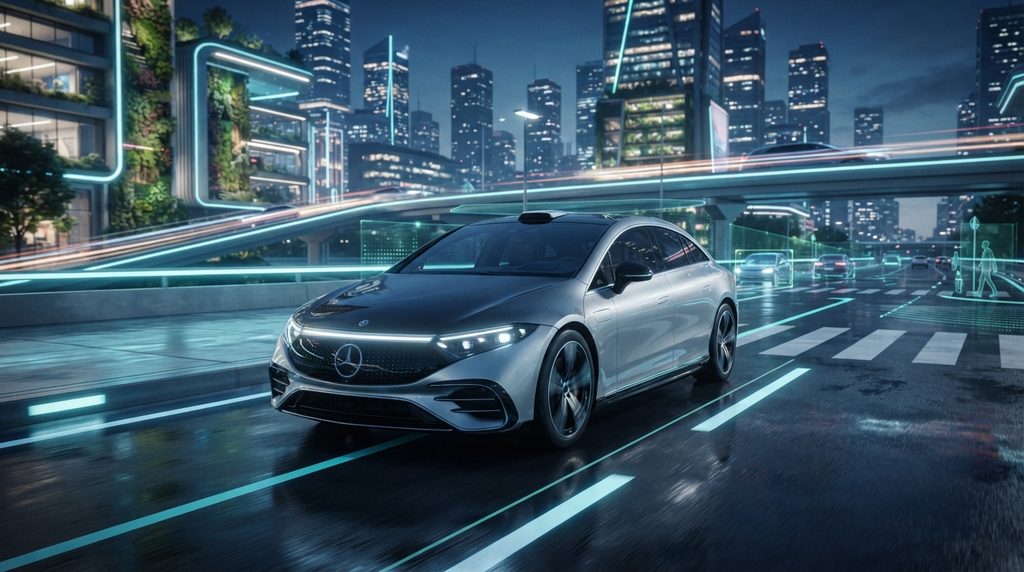
Advanced driver assistance is one of the most visible applications. AI models can analyze visual information to identify road lanes, surrounding vehicles, pedestrians, traffic signs and changing road conditions.
But artificial intelligence can also operate behind the scenes. Algorithms can optimize battery temperature, predict energy consumption according to terrain and driving behavior, improve charging-route planning and identify unusual system behavior before a component fails.
Vehicle interfaces can also become increasingly conversational. Instead of navigating complicated menus, drivers could eventually describe what they need using natural language.
The electric car is therefore becoming both a transportation machine and an AI-powered computing platform.
Autonomous Driving Could Transform Car Ownership
Electric propulsion and autonomous driving are technically separate technologies, but they are increasingly developing alongside each other.
Many autonomous-vehicle platforms use electric drivetrains because EV architectures integrate naturally with electronic control systems, computing hardware and fleet operations.
If autonomous driving eventually reaches sufficient levels of reliability and regulatory acceptance, the consequences could extend far beyond individual vehicles.
Privately owned cars currently spend much of their lives parked. Consumers purchase expensive machines that remain unused for many hours each day.
Autonomous mobility could support a different model in which some consumers request transportation when needed. A vehicle arrives, completes the journey and then continues serving other passengers.
This could dramatically increase vehicle utilization and is particularly relevant to the development of robotaxi networks.
Robotaxis Could Become One of the Biggest EV Markets
Robotaxis combine several technological revolutions simultaneously: electric vehicles, artificial intelligence, computer vision, advanced sensors, cloud computing, mapping, fleet management and automation.
A human driver represents a significant part of the operating cost of traditional taxi and ride-hailing services. If safe autonomous technology can eventually reduce that requirement, the economics of transportation could change significantly.
However, autonomous driving remains extraordinarily difficult.
A robotaxi must safely handle unpredictable real-world environments rather than merely performing well in controlled demonstrations. Road construction, unusual weather, emergency vehicles, pedestrians behaving unexpectedly, poor road markings and irrational decisions from other drivers all create difficult edge cases.
This is why autonomous driving should ultimately be evaluated according to real-world reliability and safety rather than spectacular promotional demonstrations.
Electric Vehicles Could Change the Design of Cities
Automobiles transformed cities throughout the twentieth century. Roads expanded, parking facilities consumed enormous areas of land, suburbs developed around private car ownership, and businesses were increasingly designed around vehicle access.
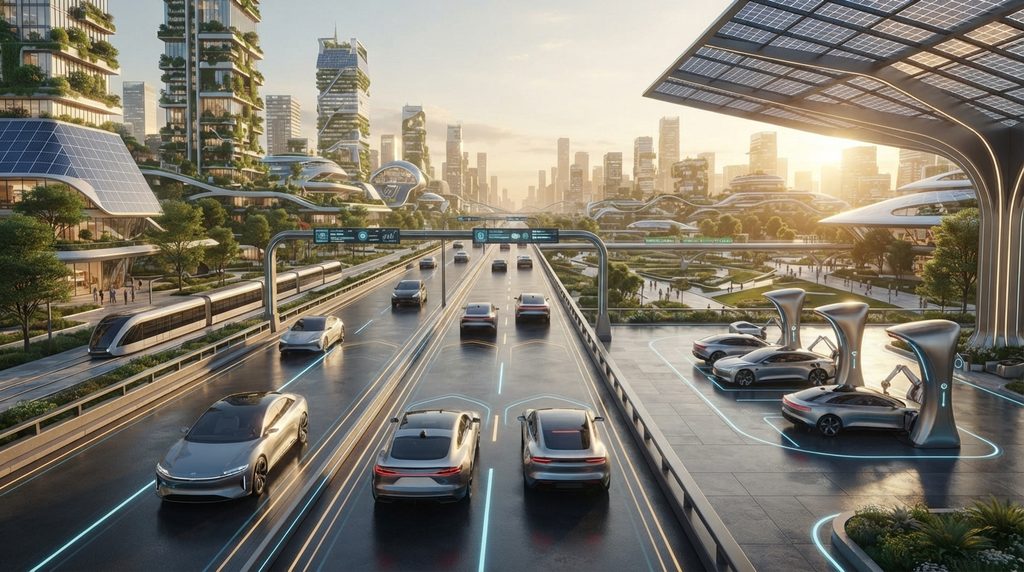
If electric and autonomous transportation becomes widespread, cities could change again.
Electric vehicles eliminate tailpipe emissions while driving, which can improve local air quality, although their total environmental impact still depends on manufacturing and electricity generation.
Charging infrastructure will also become part of urban planning. Apartment buildings may need chargers, workplaces may offer charging facilities, shopping centers could integrate charging into parking areas, and highways will require strategically located fast-charging hubs.
Transportation planning and electricity planning will therefore increasingly become interconnected.
The EV Revolution Is Also a Manufacturing Revolution
Electric vehicles require different industrial supply chains from conventional cars.
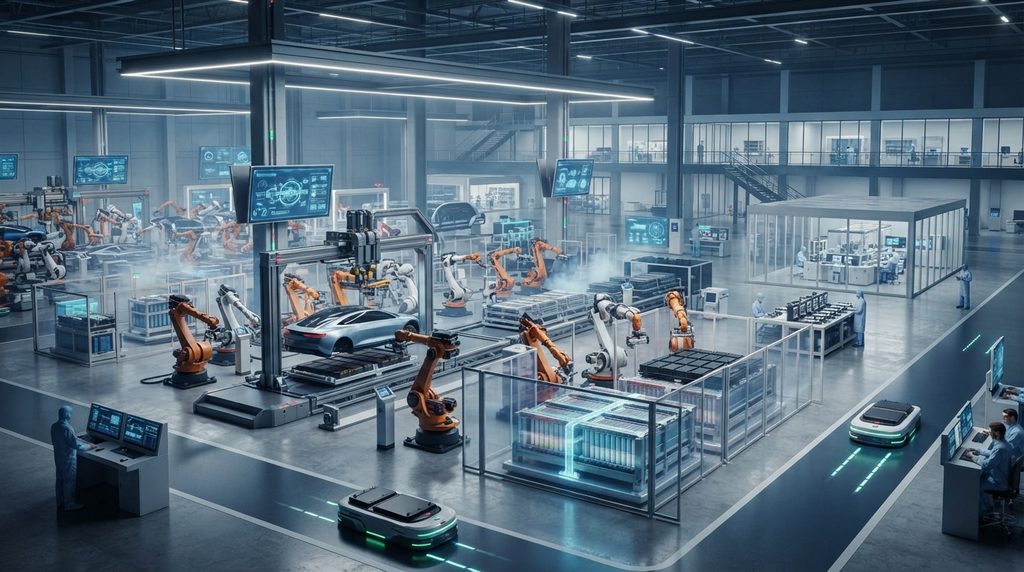
Traditional automotive manufacturing was built around engines, transmissions, fuel systems and exhaust components. Electric vehicles shift strategic importance toward battery cells, battery materials, electric motors, power electronics, semiconductors, sensors and software.
This transformation has enormous economic consequences because countries and companies that dominated combustion-engine manufacturing do not automatically dominate the electric era.
New competitors can emerge when the technological foundations of an industry change.
The electric vehicle transition is therefore not simply a competition between individual car brands. It is increasingly a competition between entire technological and industrial ecosystems.
China Has Become Central to the Global EV Industry
One of the most significant changes in the global automotive landscape is the growing influence of Chinese manufacturers and supply chains.
China has invested heavily in electric vehicles, battery production, charging infrastructure and related manufacturing capabilities. This has created intense competition both inside China and increasingly across international markets.
Chinese EV manufacturers can compete on battery technology, manufacturing speed, software and price, placing significant pressure on traditional manufacturers in Europe, North America, Japan and South Korea.
The competition has also become geopolitical. Governments increasingly view electric vehicles, critical minerals and battery manufacturing as strategic industries.
Trade policy, tariffs, subsidies and local-production requirements can therefore influence which electric vehicles reach different markets.
The Electric Vehicle Race Is Also a Battery Supply-Chain Race
An automaker can design an impressive electric vehicle, but competitive mass production becomes difficult without reliable access to batteries.
Battery manufacturing depends on complicated global supply chains involving lithium, graphite, nickel and other resources depending on the chemistry being used.
This creates several challenges. Mining has environmental consequences, some materials are geographically concentrated, processing capacity may be dominated by particular regions, and rapidly changing demand can influence commodity prices.
Manufacturers and governments are therefore attempting to diversify supply chains, improve recycling and develop chemistries that reduce dependence on expensive or strategically sensitive materials.
The long-term success of electric transportation depends partly on solving these industrial challenges.
Battery Recycling Could Become a Major Industry
EV batteries contain valuable materials and do not simply become useless when a vehicle reaches the end of its operational life.
This creates a significant opportunity for battery recycling.
A more circular battery economy could recover useful materials from old packs and return them to manufacturing, reducing dependence on newly extracted resources and potentially lowering environmental impact.
Some batteries may also receive a second life before recycling. A battery that no longer satisfies demanding automotive performance requirements could still retain enough useful capacity for stationary energy-storage applications.
The complete battery lifecycle therefore extends from material extraction and manufacturing through vehicle use, potential second-life applications, recycling and material recovery.
A sustainable electric vehicle industry will need to optimize this entire chain.
Are Electric Cars Really Better for the Environment?
The environmental question deserves a nuanced answer.
Electric vehicles produce no tailpipe emissions while driving, but manufacturing them still has environmental impacts. Battery production requires energy and raw materials, and the electricity used to charge an EV must be generated somewhere.
Overall environmental performance therefore depends on several factors, including battery manufacturing, vehicle size, electricity generation, total distance driven, vehicle lifetime and recycling.
A very large electric SUV requires more materials than a small, efficient EV. Similarly, an electric vehicle charged primarily with low-carbon electricity has a different lifecycle profile from one operating in an electricity system heavily dependent on carbon-intensive generation.
Environmental comparisons should therefore consider the complete lifecycle of a vehicle rather than focusing exclusively on what comes out of the exhaust pipe.
Bigger Batteries Are Not Automatically Better
Automotive marketing often encourages the assumption that more is always better: more horsepower, more screens, more range and larger batteries.
But extremely large battery packs involve important trade-offs. They increase vehicle weight, require more raw materials and can significantly increase purchase cost.
Additional weight can also reduce efficiency.
For drivers whose daily journeys are relatively short, carrying an enormous battery everywhere may provide limited practical benefit.
A highly efficient vehicle with a moderately sized battery and excellent charging infrastructure could therefore represent a better technological solution than simply installing the largest battery possible.
Electric vehicle innovation should focus not only on storing more electricity but also on using less electricity for every kilometer traveled.
Efficiency effectively behaves like invisible additional battery capacity.
Affordable Electric Cars May Determine the Real Winner
Premium electric vehicles attract enormous attention, but affordable models could ultimately determine how quickly electrification reaches the mass market.
An expensive performance EV can demonstrate technological capability. A reliable and affordable electric car can transform everyday transportation.
For most consumers, the decision is fundamentally practical. Purchase price, financing, charging costs, maintenance requirements, battery durability, resale value and charging convenience matter enormously.
Manufacturers capable of solving these everyday economic challenges could eventually have a greater influence on global electrification than companies producing the most spectacular high-performance vehicles.
EVs Could Be Particularly Important in Emerging Markets
Electric vehicle discussions frequently focus on China, Europe and the United States, but emerging economies represent an enormous long-term market.
Their requirements may be considerably different.
Affordable purchase prices can matter more than extreme range. Smaller vehicles may be more practical. Public charging infrastructure may be less developed, electricity reliability can vary, and used vehicles often represent a significant part of the market.
In some regions, electric two-wheelers and three-wheelers may have a larger immediate impact than passenger cars.
The EV revolution will therefore not look identical everywhere. Successful electrification strategies must reflect local economic realities, transportation patterns and infrastructure.
Could Solar Panels Power Electric Cars?
The idea of a vehicle driving directly on sunlight is extremely attractive, but the available surface area on a normal passenger car limits how much solar electricity can realistically be generated.
Vehicle-integrated solar panels may contribute some additional energy under favorable conditions, but completely powering mainstream passenger vehicles from onboard solar panels remains challenging.
The more practical relationship between solar power and electric vehicles may occur outside the car.
A home, business or charging facility can install solar panels across a much larger area and use the resulting electricity to charge vehicles. Solar carports are particularly interesting because the same infrastructure can provide shade while generating electricity.
Electric transportation and renewable energy can therefore complement each other even when solar panels are not physically integrated into the vehicle.
Wireless Charging Could Make EVs More Convenient
Wireless electric vehicle charging is another technology being explored.
Instead of physically connecting a cable, a compatible vehicle could potentially receive energy through electromagnetic systems integrated into a parking space.
For private owners, this could make charging almost invisible. The driver parks the vehicle and charging begins automatically.
The technology could be even more useful for autonomous fleets because vehicles would not necessarily require a person to connect a charging cable.
More ambitious concepts involve dynamic charging infrastructure embedded into roads, theoretically allowing compatible vehicles to receive energy while moving.
Building this type of infrastructure at large scale would be technically complex and expensive, making widespread adoption uncertain.
But the concept highlights an important direction for the industry: as electric vehicles mature, innovation will increasingly focus on making charging effortless.
The Future Car May Know Its Driver
Artificial intelligence could make vehicles increasingly personalized.
A future car could remember preferred seat positions, climate settings, navigation habits and entertainment preferences. More sophisticated systems could also interpret natural-language instructions.
Instead of navigating several menus, a driver might ask the vehicle to adjust the temperature, locate a suitable fast charger along the current route and determine whether the remaining battery will be sufficient to reach home afterward.
The AI system could combine climate controls, navigation data, charging information and energy predictions to respond to that single request.
This represents a broader shift in vehicle-interface design. Buttons and complicated menu structures may increasingly be complemented by conversation and intent.
Cybersecurity Will Become a Critical Automotive Issue
Highly connected vehicles create new security challenges.
Modern cars contain complicated software and communication systems, and greater connectivity means cybersecurity becomes increasingly important.
A vulnerability affecting a smartphone or laptop can compromise information. A serious vulnerability affecting a moving vehicle could potentially create physical consequences.
Manufacturers therefore need secure software architectures, carefully designed update mechanisms, vulnerability monitoring and long-term security support.
Consumers may eventually evaluate automotive companies partly according to their software-security reputation, much as they already evaluate smartphones, computers and online services.
The automotive industry is consequently becoming increasingly connected to the cybersecurity industry.
What Happens to Mechanics in an Electric Future?
The transition toward electric vehicles will also transform automotive employment.
EVs still require maintenance, but the nature of that work differs from traditional combustion vehicles. There is no conventional engine oil to replace, and many drivetrain components are mechanically simpler.
At the same time, electric cars contain increasingly sophisticated electronics, high-voltage systems, sensors, battery-management technology and software.
Mechanics are therefore unlikely to simply disappear. Their skills will evolve.
Future automotive technicians may require greater expertise in high-voltage safety, battery diagnostics, electronics, software systems, sensors, thermal management and advanced driver-assistance systems.
The electric vehicle revolution is therefore also a major workforce-training challenge.
Will Gasoline Cars Disappear?
Gasoline and diesel vehicles are unlikely to disappear suddenly.
The global vehicle fleet is enormous, cars can remain operational for many years, charging infrastructure remains uneven, consumer preferences differ significantly and some applications remain difficult to electrify.
Government policies also vary substantially between countries.
Even if electric vehicles eventually represent a large majority of new-car sales in major markets, existing combustion vehicles could remain on roads for decades.
The transition should therefore be understood as a gradual transformation of the global vehicle fleet rather than an immediate replacement.
Hybrid technologies may also remain relevant in some markets and applications during parts of this transition.
Electric Cars and the Future of Oil
Transportation represents a significant source of global petroleum demand.
Large-scale vehicle electrification could therefore have consequences extending far beyond automotive manufacturing.
When millions of vehicles move from gasoline or diesel toward electricity, part of transportation energy demand effectively shifts from oil markets into electricity markets.
This could influence oil demand, electricity generation, renewable energy investment, battery manufacturing, grid infrastructure, energy security and geopolitics.
Countries that import large quantities of petroleum may view transportation electrification partly as an energy-security strategy.
However, the transition can also create new dependencies involving battery materials, semiconductors, electricity infrastructure and advanced manufacturing.
The dependencies do not simply disappear. They change.
What Will Electric Cars Look Like by 2030?
Predicting individual vehicle models is difficult, but several broader technological directions appear plausible.
Electric vehicles are likely to become more efficient while charging infrastructure becomes faster and more widely available. Battery technologies could continue diversifying as manufacturers optimize different chemistries for different vehicle categories.
Software will become increasingly important to the ownership experience, while artificial intelligence could play a larger role in navigation, energy management, driver assistance and vehicle interfaces.
Autonomous driving technology will continue developing where technical reliability and regulation permit it. Battery recycling will also become increasingly important as larger generations of EV batteries reach later stages of their lifecycle.
Competition between manufacturers will become increasingly global and increasingly technological.
Perhaps the most important change will occur when consumers stop thinking about an electric vehicle as a special category.
An electric car may eventually simply become a car.
That is when the transition will have truly matured.
Frequently Asked Questions About Electric Cars
Are Electric Cars the Future?
Electric vehicles are becoming an increasingly important part of global transportation, although adoption speed varies significantly depending on the country, infrastructure, vehicle category, government policy and local economic conditions.
What Is the Biggest Problem With Electric Vehicles?
Cost, charging availability, charging time, battery supply chains and affordability remain important challenges. Their significance varies substantially depending on the market and individual driver’s circumstances.
How Long Do EV Batteries Last?
Battery lifespan depends on chemistry, temperature, charging behavior, vehicle design and usage. Modern battery-management systems are specifically designed to protect EV batteries throughout long periods of operation.
What Are Solid-State Batteries?
Solid-state batteries use solid electrolyte materials instead of the conventional liquid electrolyte architecture used by many current lithium-ion batteries. They are being developed for potential improvements in areas including energy density and safety.
What Is Vehicle-to-Grid Technology?
Vehicle-to-Grid, commonly abbreviated as V2G, allows compatible electric vehicles and charging infrastructure to potentially return stored electricity from the vehicle battery to the electricity system when appropriate.
Are Electric Cars Autonomous?
No. Electric propulsion and autonomous driving are separate technologies. An electric vehicle can be completely controlled by a human driver, while autonomous-driving technologies can theoretically be developed for different vehicle architectures.
Are Electric Cars Cheaper to Maintain?
Electric drivetrains generally contain fewer moving mechanical components than traditional combustion engines, which can reduce certain routine maintenance requirements. Total ownership costs still depend on the specific vehicle and how it is used.
Will Electric Cars Completely Replace Gasoline Cars?
The transition is likely to take many years and will differ considerably by region. Combustion vehicles are likely to remain part of the global fleet for a long time even as electric vehicle adoption increases.
Final Thoughts: The Electric Car Is Becoming a Technology Platform
The electric vehicle revolution is not simply about replacing gasoline with electricity. It represents a much larger transformation of transportation.
Cars are becoming software platforms. Batteries are becoming strategic technologies. Artificial intelligence is entering the driving experience. Vehicles are connecting directly to electricity grids, while autonomous systems are beginning to challenge traditional ideas about car ownership.
Automotive manufacturing is also becoming increasingly intertwined with semiconductors, energy infrastructure, battery supply chains and global technology competition.
This is why the future of electric cars matters even to people who do not currently intend to buy one. Technologies developed around EVs could influence electricity networks, renewable energy, cities, robotics, manufacturing, cybersecurity and artificial intelligence.
The twentieth-century automobile was fundamentally a mechanical machine powered by fossil fuels. The twenty-first-century automobile is increasingly becoming something very different: an intelligent, connected and electric computing platform capable of moving through the physical world.
If current technological trends continue, the transformation of the automobile may ultimately change much more than the car itself.